
Ella Watkins-Dulaney, PhD
Science Writer at Plasmidsaurus
For years, calling a plasmid "verified" didn't necessarily mean every base had been sequenced. More often, it meant Sanger sequencing had confirmed the insert and flanking regions while most of the construct remained unchecked. We all knew mutations could happen outside the regions we sequenced, but covering an entire plasmid by Sanger was too slow, inconvenient, and expensive to do routinely.
With long-read Nanopore Whole Plasmid Sequencing, verification no longer has to mean "the parts we happened to check." Now, for the same cost as a few Sanger runs, you can get overnight confirmation that the entire plasmid in your tube actually matches the one on your map.
Let’s talk about four critical times in your research when it is especially valuable to sequence the whole plasmid.
1. When you first build or receive a construct
The best time to establish what you actually have is before you start building experiments on top of it.
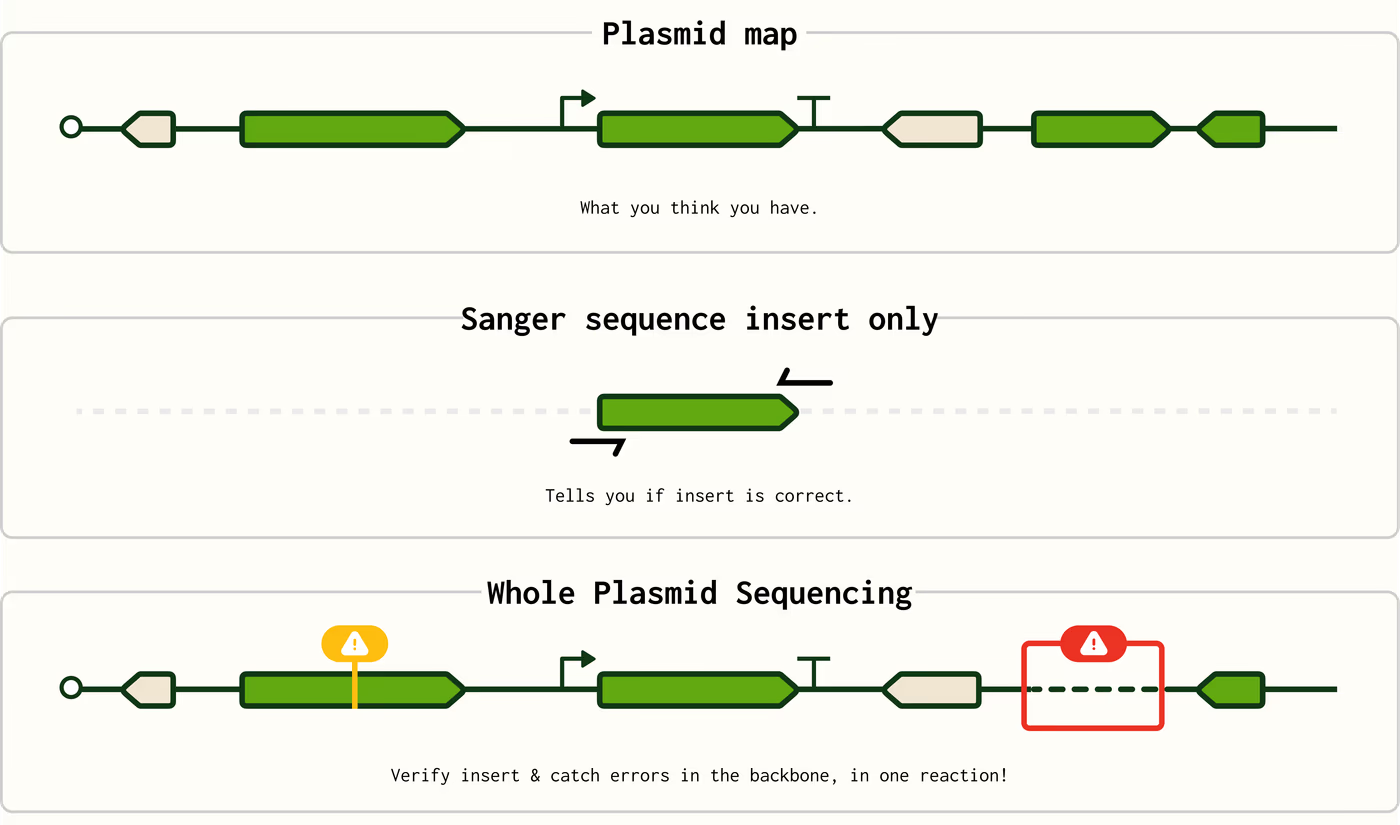
A plasmid map tells you what a construct is supposed to contain. It does not guarantee that every base in the tube matches that design. Cloning errors, undocumented changes, and mutations introduced during propagation can all create differences between the expected sequence and the physical DNA.
And those discrepancies are not especially rare. As part of its QC process, Addgene uses Plasmidsaurus Whole Plasmid Sequencing to compare incoming constructs against information provided by the depositing lab (Addgene, 2026). Its quality-control team reports finding errors in about 30% of deposited plasmids (Shepard, 2025). Not all of those discrepancies are construct-breaking mutations, but they remind us how important it is to verify every plasmid you receive.
Sequencing the entire construct before you start working with it gives you a trusted reference for everything that follows. If something changes later, at least you know you started from the plasmid you intended.
2. After propagation
Even when a plasmid is correct at the beginning of a project, it may not stay that way. Plasmids are not passive passengers and can impose a substantial fitness burden on their host cells.
Cells, unfortunately, are not invested in preserving your experimental design.
If a mutation disables a costly part of the construct, the cell carrying that plasmid may grow faster than those carrying the intended one. Over repeated rounds of propagation, that variant can spread through the culture and eventually become dominant. In other words, the very pressures that make biological systems adaptable can quietly select against the construct you are trying to maintain.
There isn't a single "plasmid mutation clock" that tells you to resequence after a certain number of days or passages. But the higher the burden your plasmid imposes, the more pressure your cells are under to escape. Radde et al. (2024) found that constructs slowing Escherichia coli growth by more than roughly 45% were effectively impossible to maintain, because escape mutants took over during ordinary cloning and propagation.
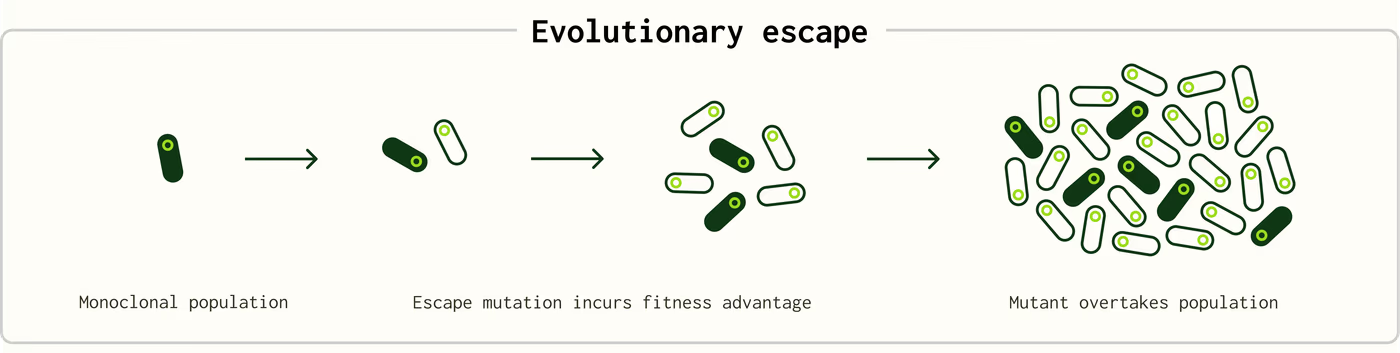
Importantly, evolutionary escape does not always completely break a plasmid. In their study, Radde et al. identified multiple mutations that reduced fluorescent protein expression without eliminating it entirely (Radde et al., 2024). The plasmids still “worked” — just not as well as intended.
In their case, the researchers were able to recognize that something was wrong because they had created a set of controls that should have differed only in expression strength. In a less controlled experiment, there may be no equivalent comparison. If constructs differ in several ways, or if there is no clear expectation for how a construct should behave, an escape mutation might simply be missed or mistaken for a genuine biological effect.
The best strategy, then, is to reduce the chances of escape while also having a way to detect it when it happens. Good strain-management practices can reduce the opportunity for escape in the first place. Using inducible expression can limit unnecessary burden, and returning to a trusted stock rather than continuously propagating the same lineage can reduce the number of opportunities for escape variants to take over. But those practices cannot tell you whether a change has already happened.
If a plasmid has been grown repeatedly, regenerated from an old stock, or generally had a long and adventurous life since it was last verified, resequencing can tell you whether it is still the construct you think it is.
3. When your conclusions depend on it
Scientists routinely spend hundreds or thousands of dollars on experiments built around the assumption that a plasmid is correct. The more your experiment depends on a plasmid behaving exactly as expected, the more important it is to verify the entire construct.
Not every sequence change has the same consequence. A mutation that is mostly inconvenient in one experiment can become a serious confounding variable in another.
Consider a mutation in the origin of replication that lowers plasmid copy number. If your goal is simply to express and purify an enzyme for biochemical characterization, the main effect may be lower protein yield. You may need to grow more cells, but the purified protein itself would still behave exactly as expected.
Now imagine that you are comparing how two enzyme variants affect cell growth. If one plasmid carries that same origin mutation, the two constructs may no longer be present or expressed at comparable levels. What looks like a biological difference between the variants could instead reflect a difference in plasmid copy number.
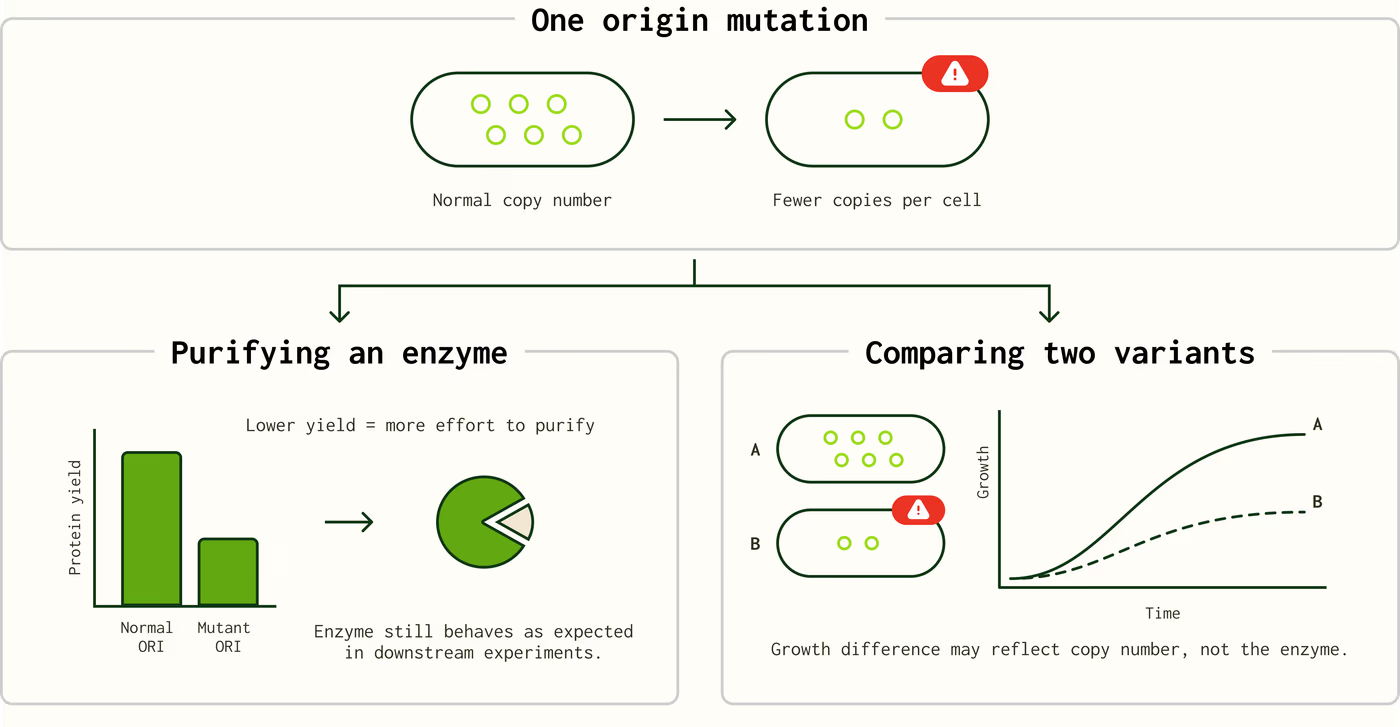
Same mutation, different context, very different consequences.
Whole Plasmid Sequencing gives you a way to remove that uncertainty before it becomes part of your data. If the plasmid is central to the conclusion you are trying to draw, verifying the full sequence helps ensure that you are actually testing the construct you think you are.
4. Before troubleshooting gets expensive
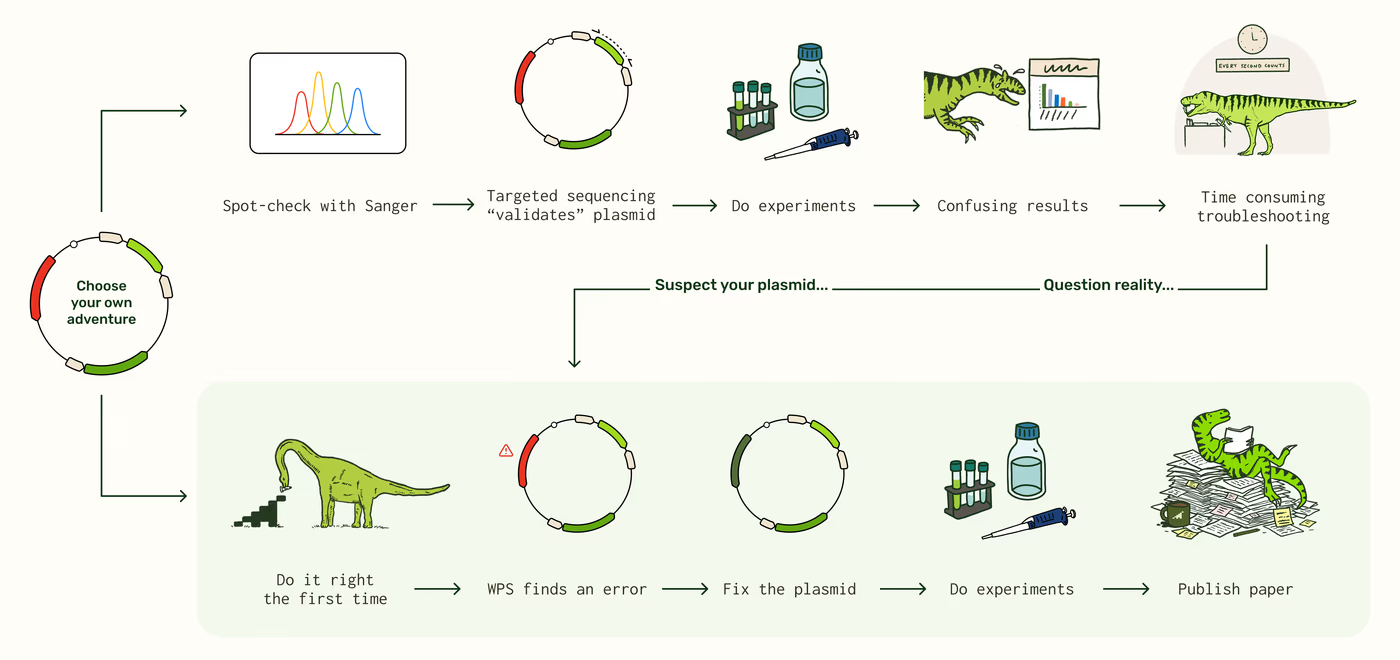
Few things are more frustrating than troubleshooting an experiment for weeks with no clear answer. Your protein won't express the way it should. Your phenotype makes no biological sense. So you optimize protocols, replace reagents, repeat experiments, and start questioning everything, including your sanity.
The longer troubleshooting goes on, the more expensive every untested assumption becomes. If the plasmid itself has not been fully verified, every optimization step is being built on the assumption that the DNA is correct.
When full-plasmid verification required extensive Sanger sequencing, it made sense to leave that question until later. Now, it is practical to answer it near the beginning of the troubleshooting process. If the plasmid checks out, you can move on to the other variables with one major source of uncertainty removed. If it does not, you may have saved yourself weeks of troubleshooting the wrong problem.
Before you spend weeks chasing every other possibility, verify the DNA first.
So, when should you sequence your whole plasmid?
There is no single answer for every plasmid or every experiment. Some constructs are remarkably stable; others can begin accumulating escape mutations surprisingly quickly. The better question is how much confidence you need in the DNA you are actually working with.
A good rule of thumb is to sequence your plasmid when:
- It’s new to you — whether you built it yourself or received it from someone else.
- It’s accumulated some mileage — after repeated propagation, recovery from an old stock, or movement between people or labs.
- Your conclusions depend on its behavior — especially when subtle changes in expression or phenotype could matter.
- Something isn’t working as expected — before troubleshooting becomes a weeks-long investigation of every variable except the plasmid itself.
Whole Plasmid Sequencing doesn’t replace good strain and stock management. Clearly labeled glycerol stocks, records of what was verified and when, and returning to a trusted stock rather than repeatedly propagating the same culture are still the foundation of good molecular biology. With those practices in place, Whole Plasmid Sequencing gives you a practical way to check the construct at the moments when sequence certainty matters most.
Because cloning errors will happen. Your cells will evolve. At least now, they don’t have to happen behind your back(bone).
References
Addgene. Addgene and Plasmidsaurus announce strategic partnership to scale sequencing for leading plasmid repository. Addgene (2026). https://www.addgene.org/news/plasmidsaurus-partnership/
Radde, N. et al. Measuring the burden of hundreds of BioBricks defines an evolutionary limit on constructability in synthetic biology. Nat. Commun. 15: 6242 (2024). doi: 10.1038/s41467-024-50639-9
Shepard, A. A look at Addgene's QC process. Addgene Blog (2025). https://blog.addgene.org/a-look-at-addgenes-qc-process
PS-0026-E | v1.0 | Revised Oct 2, 2026