
RNA-Seq

Incredibly fast and affordable RNA-seq with analysis included.

RNA PDP

$50 / $80

Academic / industry, per sample

No quote or minimum order

Results in 3 days

When shipped within the US or Europe

About one week from other regions

Free ambient shipping

Through our dropbox network
Preserved cells or purified total RNA (Sample Prep →)

Know more about your samples

Check cell identity and screen for mycoplasma contamination

Gene expression analysis for your next experiment

Compare treatments, investigate a phenotype, or keep tabs on your favorite genes. With transcriptome-wide Plasmidsaurus RNA-Seq and interactive analysis in every order, you can measure the genes you planned for and the thousands you didn’t, and see what else your data can tell you when the next hypothesis comes along.


Already using RNA sequencing?

Bring gene expression analysis into more of your experiments with fast turnaround and a fixed price per sample. Explore your results online, or download the data for your own analysis.

Coming from RT-qPCR?

Start with the genes you’d normally run, then wander off-panel whenever a new question pops up. The answers are already in your data. No new samples, no new assays.

Included analysis

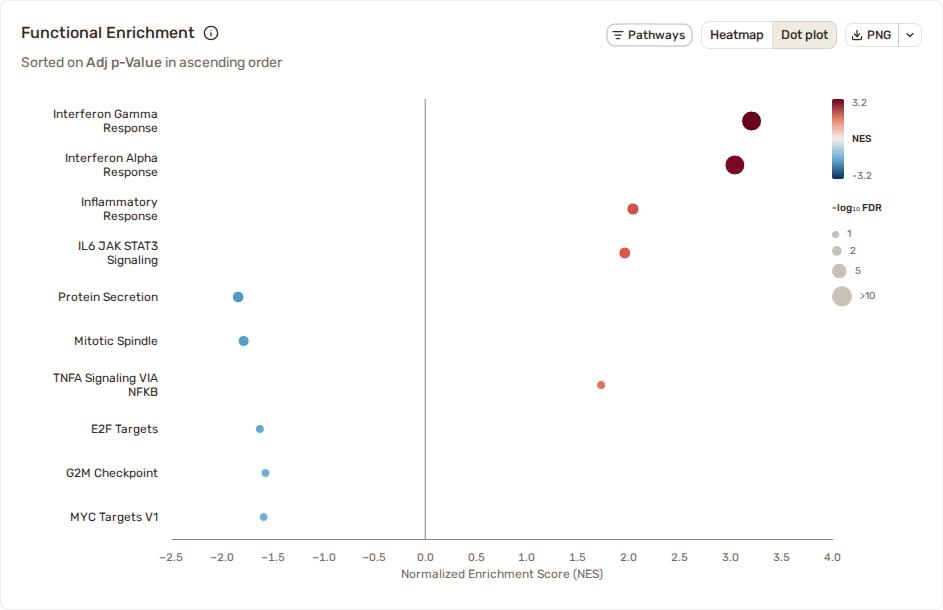
Explore the response, from pathways to individual genes

Move between a broad view of your experiment and the genes that matter to your question.

See how your samples differ

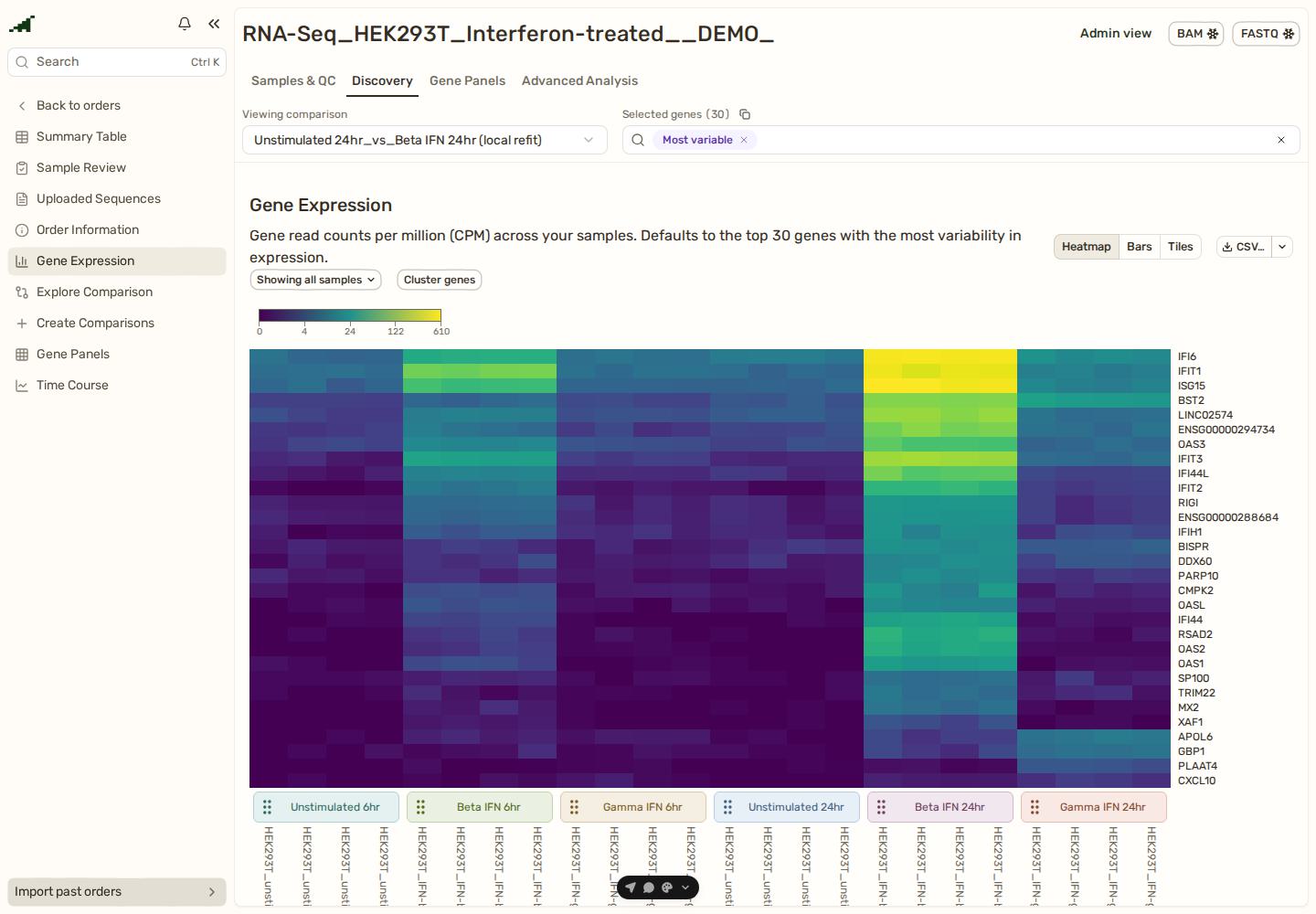
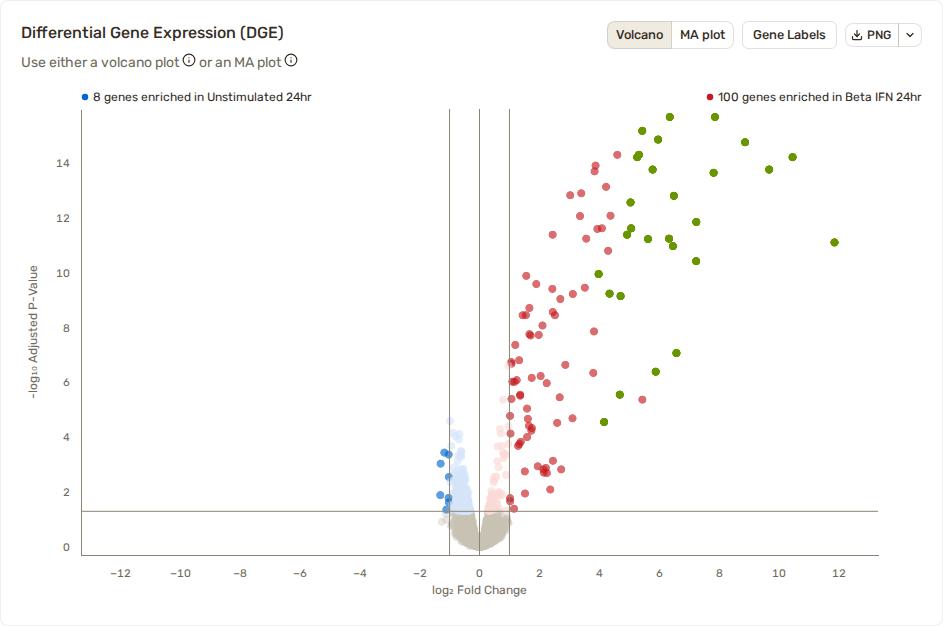
Explore expression patterns in heatmaps, bars, and tiles. Create comparisons to investigate which genes change between conditions.

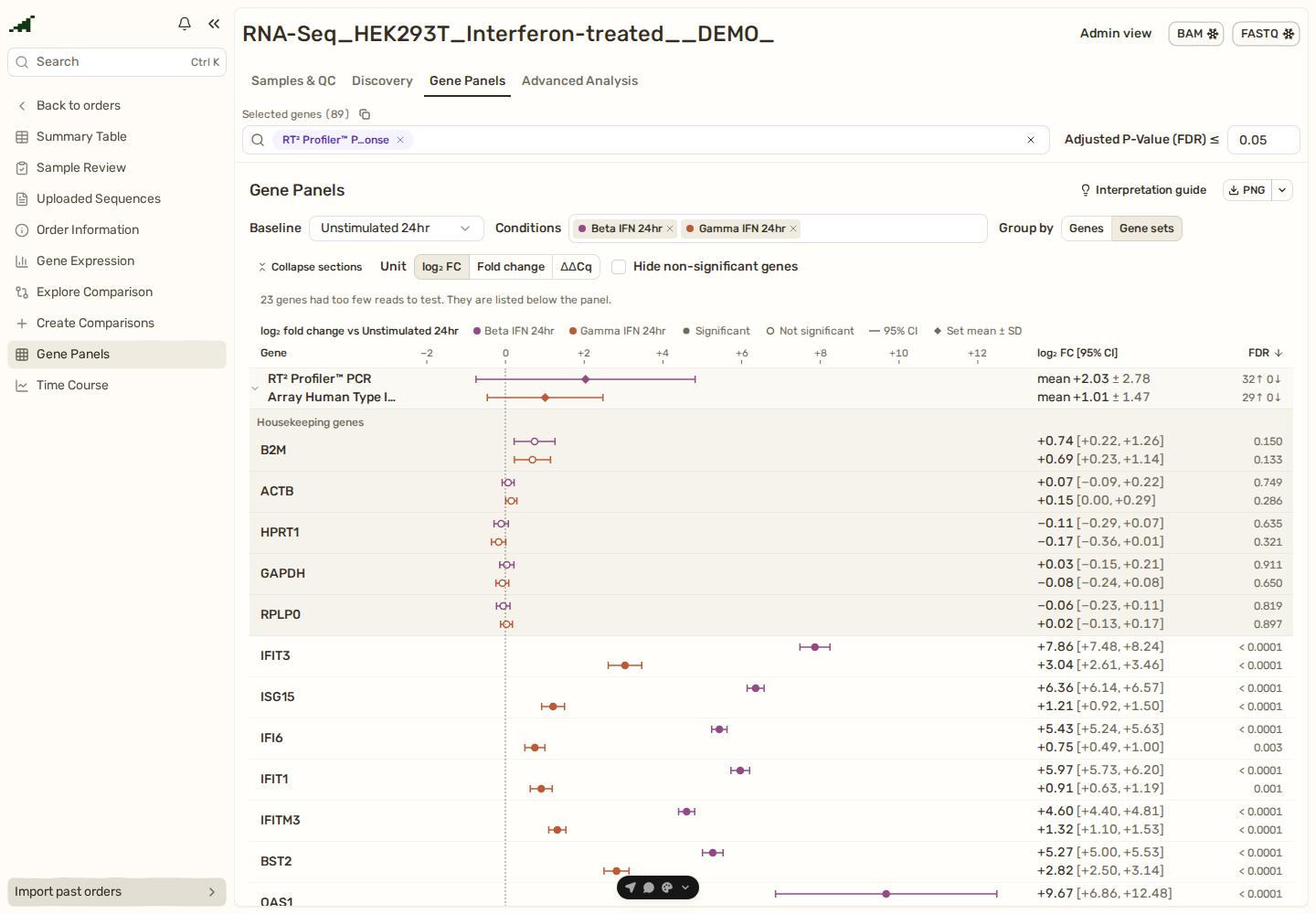
Keep your familiar genes in view

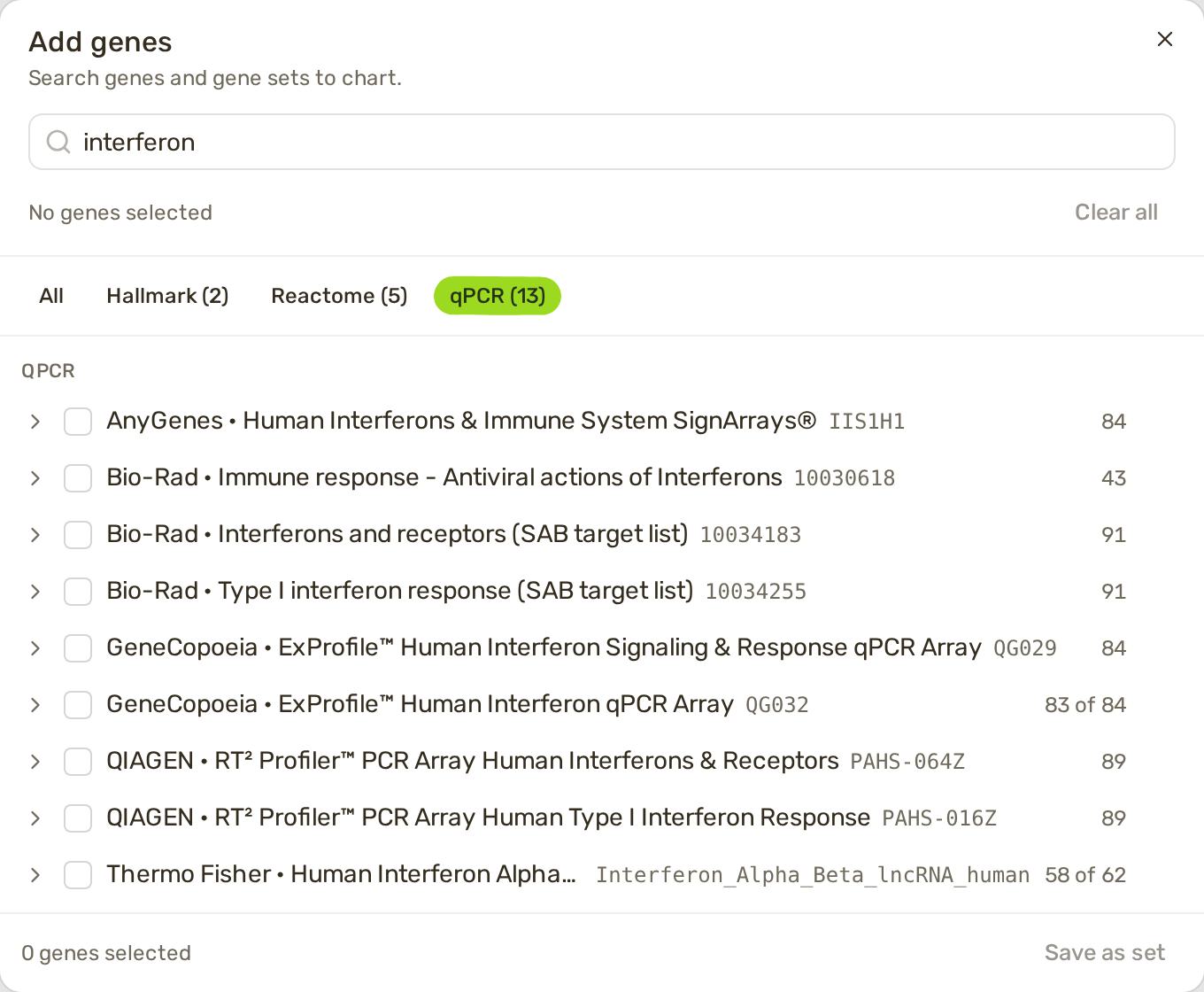
Paste a gene list or search for individual genes, then compare them across up to four conditions against a common baseline. Export a figure or the underlying data.

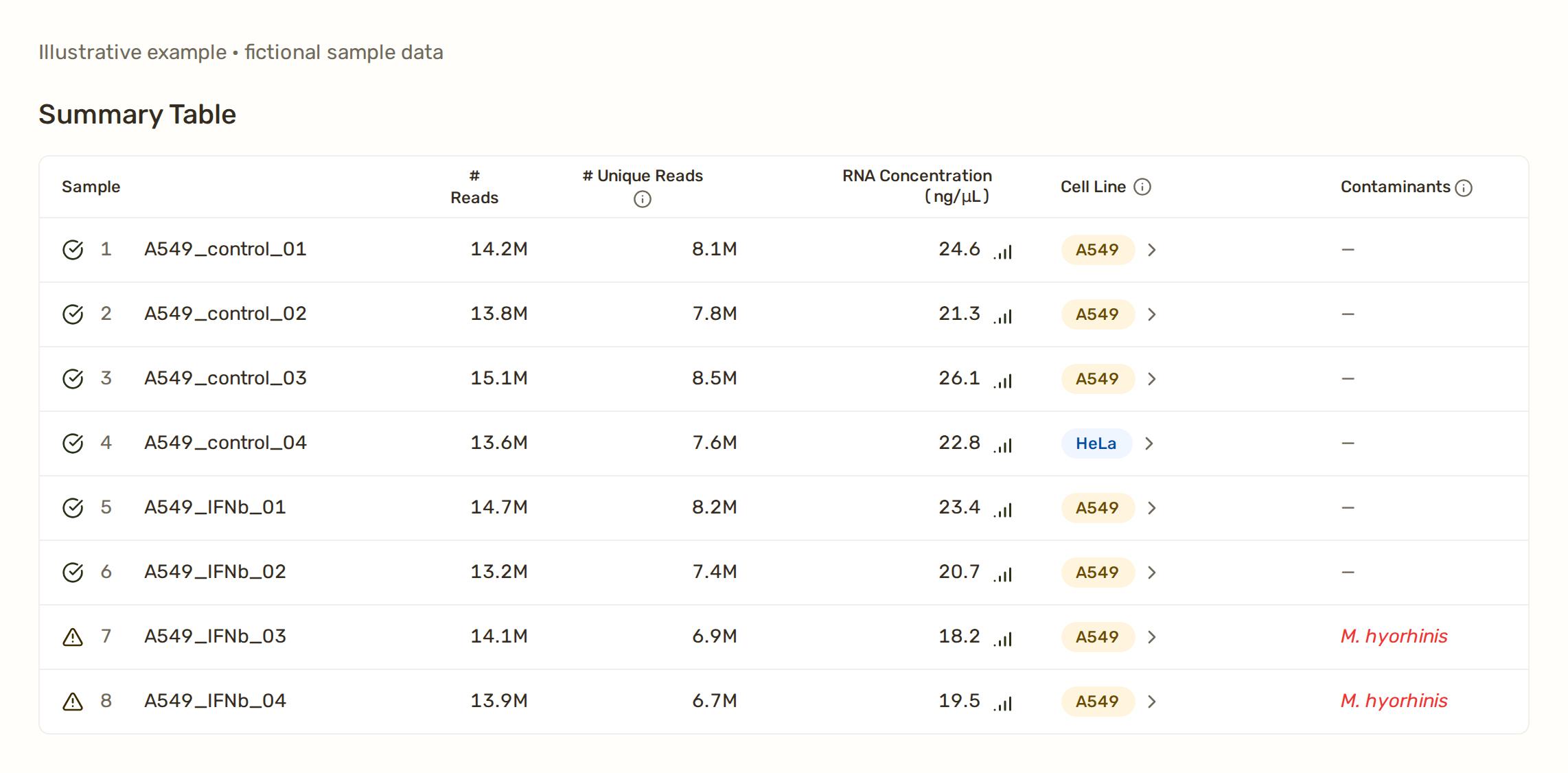
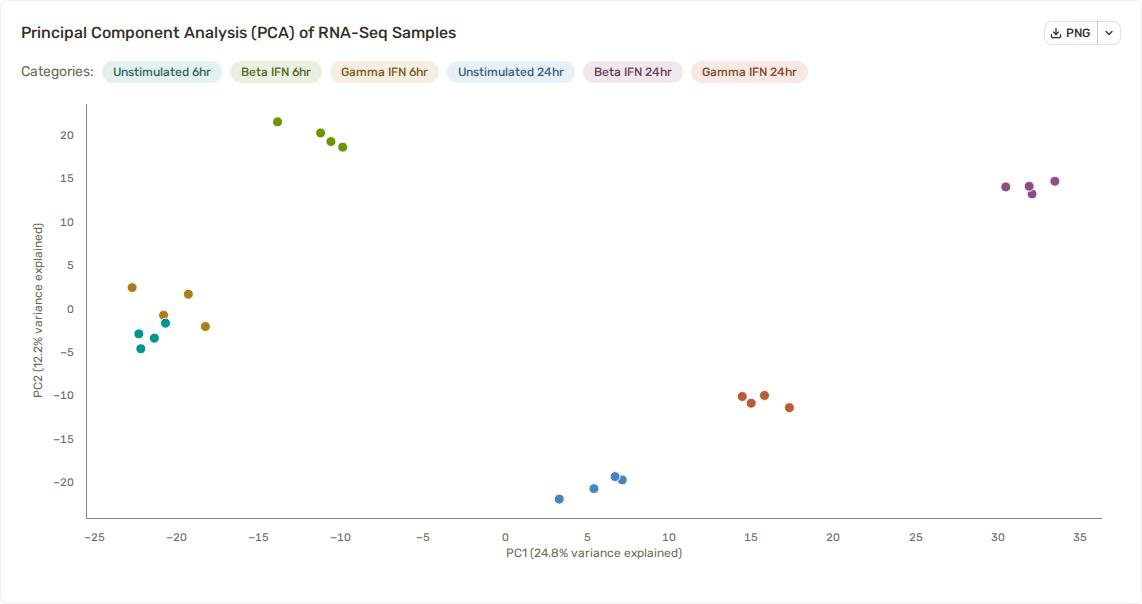
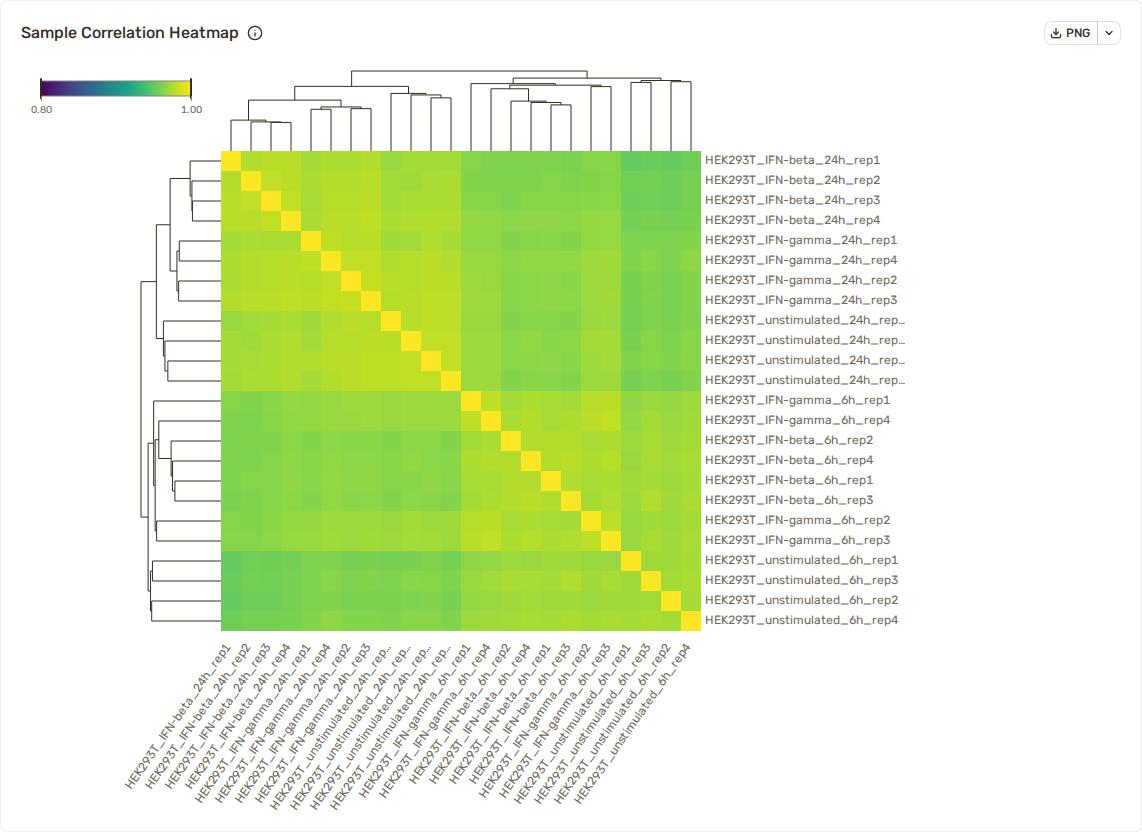
Check sample identity and quality

Available views and gene-set libraries depend on your order and organism.

Compare the evidence

Explore comparisons with conventional RNA-seq and RT-qPCR

See how our RNA-Seq stacks up against RT-qPCR and conventional RNA-seq, so you can decide with evidence.

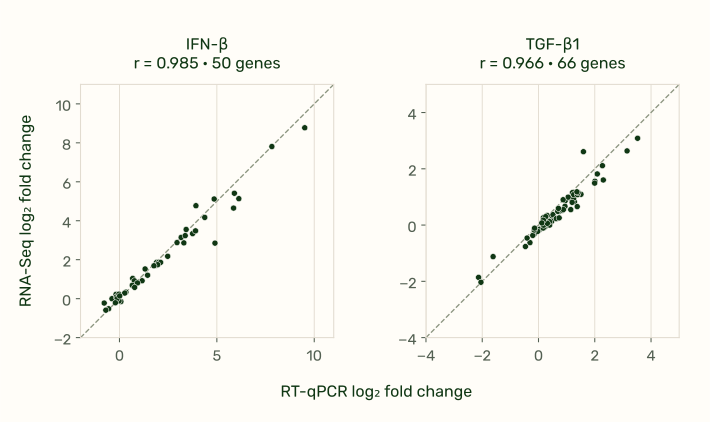
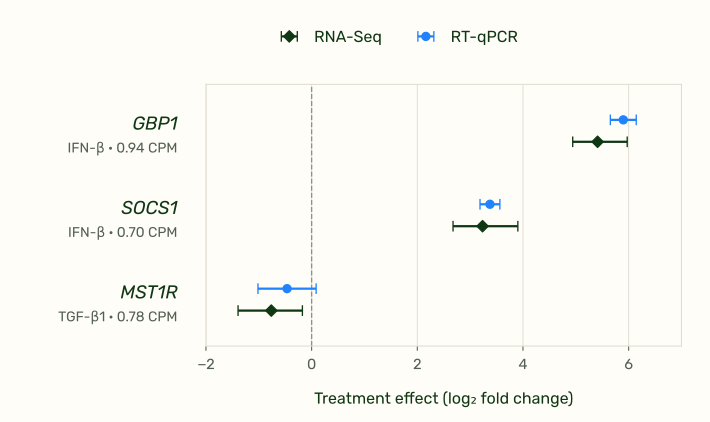
Measure fold changes that match RT-qPCR

On the same 16 samples, RNA-Seq closely matched RT-qPCR fold changes gene for gene (Pearson r = 0.97–0.99) and picked up responses even in genes expressed below 1 count per million (CPM).
3′ RNA-Seq compared with conventional RNA-seq

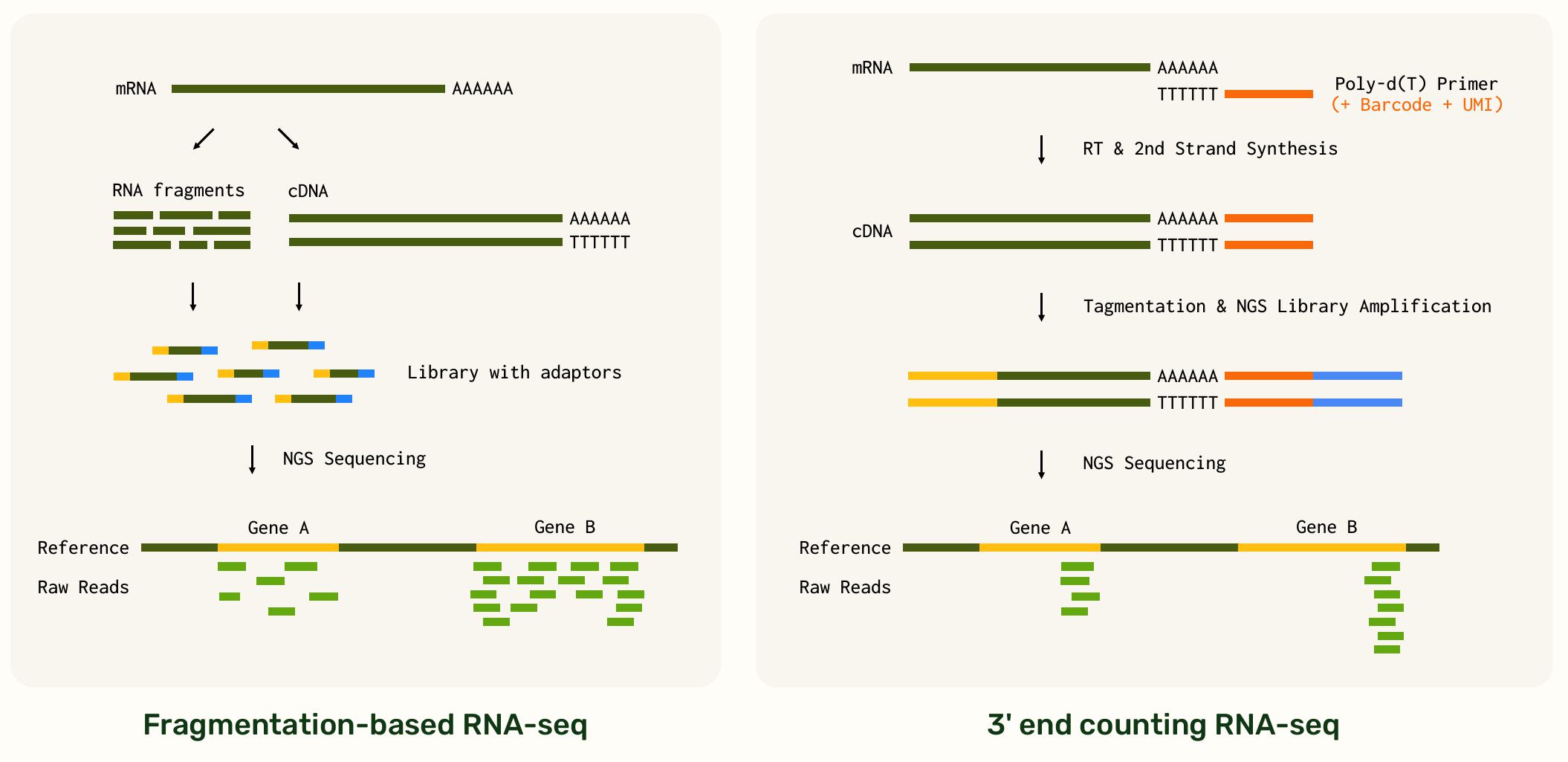
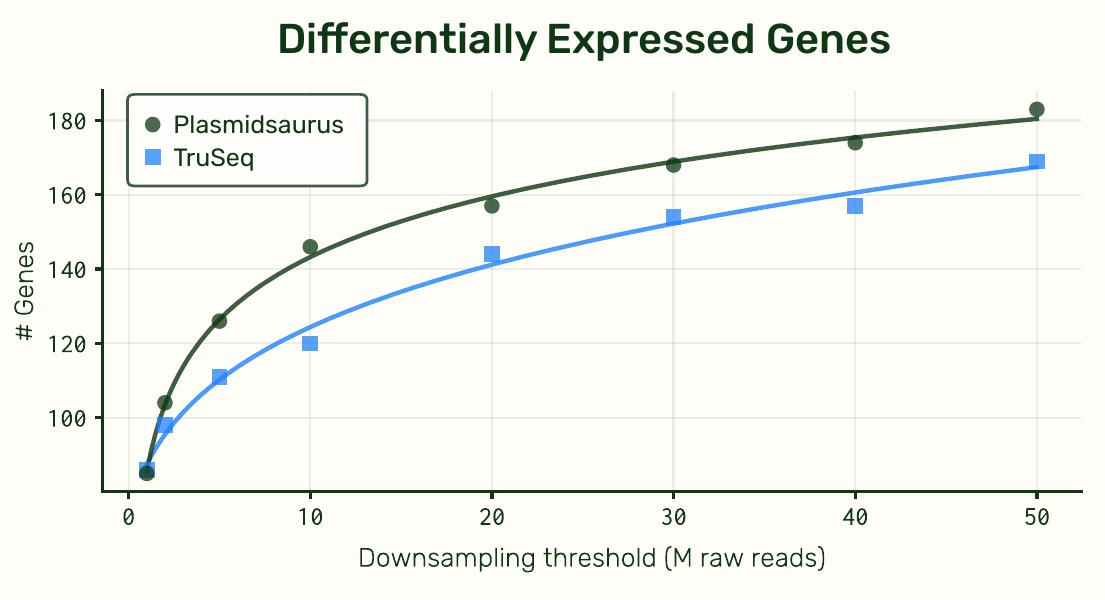
Counting the 3′ ends of polyadenylated transcripts focuses your reads on gene-level expression, so each sample needs less sequencing depth.

Mycoplasma screening and cell line identification

Make sure your results reflect your biology, not a contaminant or a mix-up. These checks run on the sequencing data from your existing order, at no extra cost.

Mycoplasma flask

Mycoplasma screening

Catch hidden contamination! Mycoplasma can skew your expression data without changing how your cells look. We flag it in your results so you can act before it costs you more experiments. 

Go to Technical Note

ID Mockup

Cell line and mouse strain ID

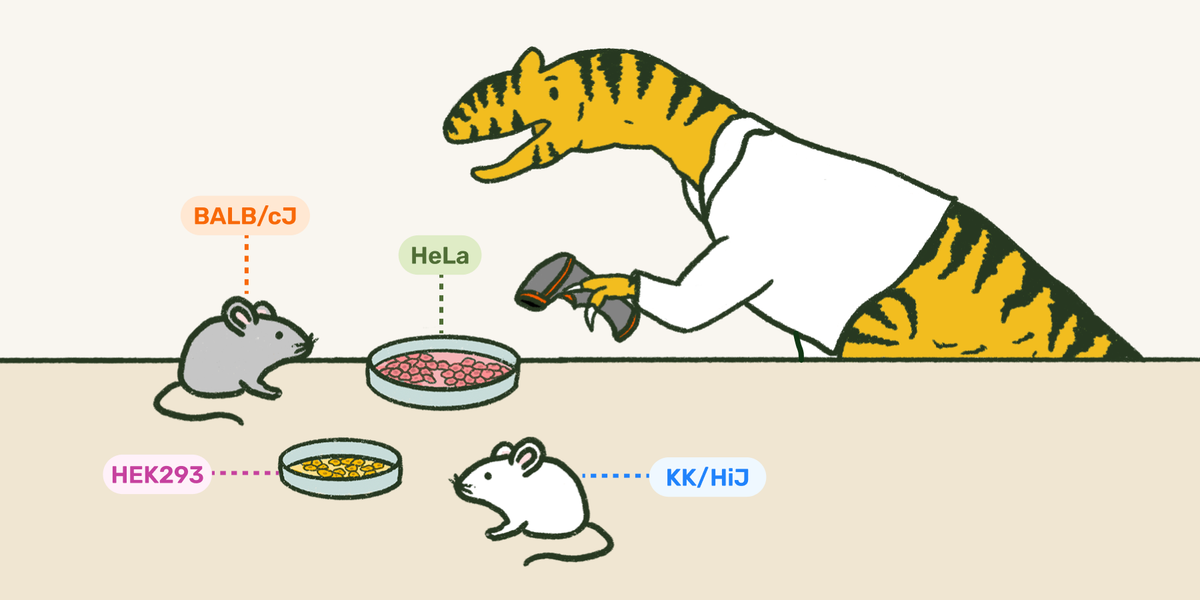
Catch sample mix-ups! A misidentified cell line can undermine your conclusions without you ever knowing. We identify human cell lines and mouse strains so you know exactly what you sequenced.

Go to Technical Note

Included results and downloadable files

For file formats, processing details, and the full list of deliverables, see the RNA-Seq Technical Documentation.

Gene expression data

Gene count matrices, comparison tables, and exportable plots for your figures and downstream analyses.

Sequencing files

Processed FASTQ reads and deduplicated, aligned BAM files for your own analysis workflow.

Quality control

Mycoplasma screening, cell line or mouse strain identification where supported, and PCA and correlation views, plus per-sample mapping statistics and MultiQC reports.

Thumbs up

"This is SO COOL!!!!! Huge kudos to Plasmidsaurus for this incredibly fast, affordable service. We'll definitely love using this service in the future."

Molly Gasperini
Associate Director of Genome Engineering, Allen Institute

Ready for your next experiment?

Send supported cultured cells in Zymo DNA/RNA Shield or purified total RNA preserved with SEQguard Dino Preserve ↗  for room-temperature shipping. We handle library preparation, sequencing, and analysis.

Step 1

FAQs

The service is designed for comparing gene-level expression of polyadenylated RNA. If that is the focus of your experiment, review our comparison with fragmentation-based RNA-Seq. Studies focused on transcript structure, splice isoforms, or non-polyadenylated RNA need a different approach. Contact us to discuss your project.

Yes. Select individual genes or paste your gene list to explore their expression in your RNA-Seq data. Where Gene Panels is available, you can compare conditions against a common baseline using fold change, log₂ fold change, or a ΔΔCq-equivalent display. The last option is a transformation of the RNA-Seq estimate, not a qPCR measurement. You can also explore genes outside your original list.

Submit supported cultured cells preserved in Zymo DNA/RNA Shield, or purified eukaryotic total RNA. SEQguard Dino Preserve enables room-temperature shipping of purified RNA; dry-ice shipping is also accepted. Check the sample preparation guidelines for accepted sample types, input amounts, and preservation instructions.


Samples meeting the input requirements typically produce at least 10 million unique, deduplicated mapped reads. Yield varies with RNA quality, input, and mapping, and is not guaranteed. Your results include mapping statistics to help interpret the yield. See the technical documentation for details.

Include biological replicates to estimate variability and support statistical comparisons. When either group has only one sample, comparisons provide descriptive fold changes without inferential significance. You can submit samples without a minimum order size, but experimental replication should match the question you want to answer.

Yes. Download gene counts, quality-control reports, processed FASTQ reads, and deduplicated, aligned BAM files. You can use these alongside the included online analysis. The data and deliverables documentation describes how each file is processed.