
What are batch effects?
Batch effects are technical variations that affect all samples within a batch similarly. Differences between batches can occur when samples are processed at different times, by different operators, or with different reagent lots. Batch effects can result in apparent expression differences that can obscure true biological signals and lead to misleading conclusions if not properly accounted for.
How can I avoid batch effects?
Strategic experimental design is the most effective way to avoid batch effects. Whenever possible, we recommend submitting related samples within a single order to ensure they are processed simultaneously, providing the highest level of data consistency and biological accuracy. To support this, our RNA-Seq workflow is designed to process up to 96 samples per batch.
For larger studies that have more than 96 samples, or for projects requiring multi-batch submissions for another reason, we recommend including several identical samples on every plate to serve as anchor controls.
You can implement anchor controls using one of two methods:
- Technical replicates (recommended): Prepare a single control sample in bulk and distribute it across all plates.
- Biological replicates: Include replicates of the exact same experimental condition on every plate.
Both approaches provide the necessary reference points to correct batch effects and ensure that your results reflect true biological differences rather than plate-specific variation. We recommend the use of technical replicates over biological replicates due to the possibility of additional variation being introduced that may disguise legitimate batch variations.
Using Plasmidsaurus’s on-platform anchor-based batch correction
Plasmidsaurus offers an on-platform anchor-based batch correction feature (currently in beta) to make comparing experiments across plates or batches easier. We use an implementation of RUVseq, minimizing the variability between anchor samples across batches to normalize results.
Instructions for use
- Every batch must include ≥3 anchor samples that each have >5 million unique reads, and at least one other sample to be corrected.
- More anchor samples increases the accuracy of the correction.
- For effective batch correction, your anchor replicates should share the same biology as the groups in your DGE comparison (e.g. your control group). RUV estimates unwanted variation from the anchors — if their expression profile is too distant from the samples being compared, the correction factors it learns may not generalize well to your genes of interest.
- All orders must use the same species reference.
If you have >96 samples in a single order, perform a batch correction by navigating to the sidebar and clicking the button “Set anchor samples”. Once batch correction is run, it can be toggled on and off across your Results page from the sidebar.
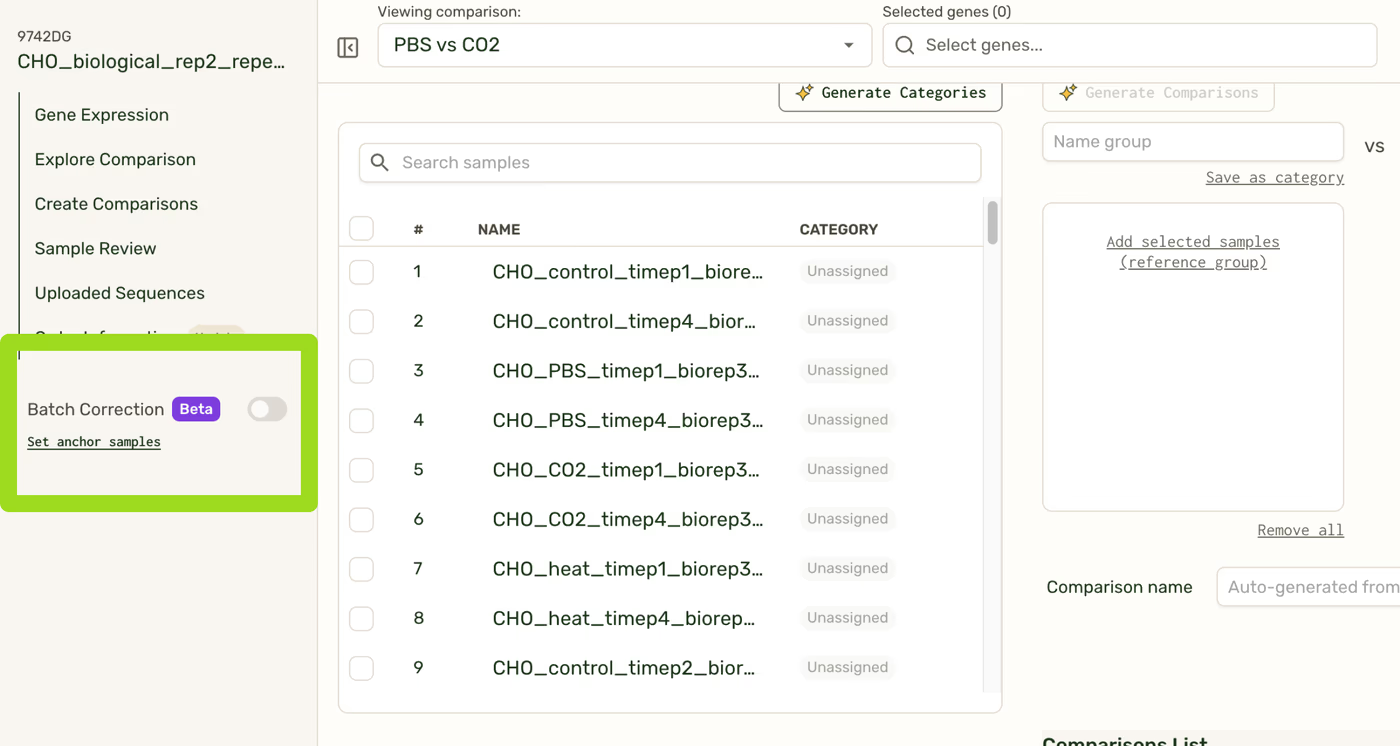
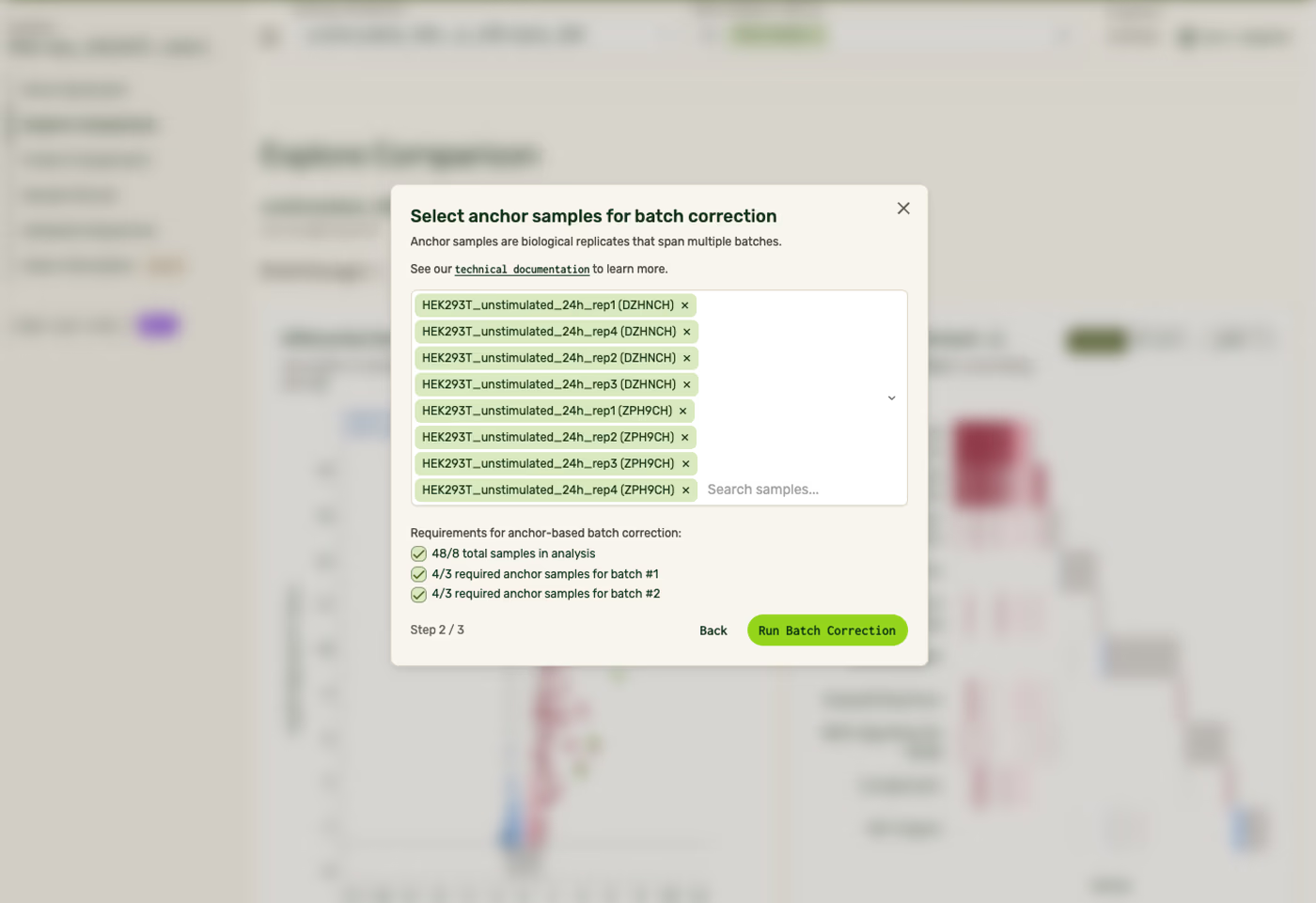
If you have <96 samples in a single order, importing samples from a different order will prompt you to select anchor samples and run batch correction. One of the requirements of importing samples is to have a successful batch correction. Once batch correction is run, it can be toggled on and off across your Results page from the sidebar.
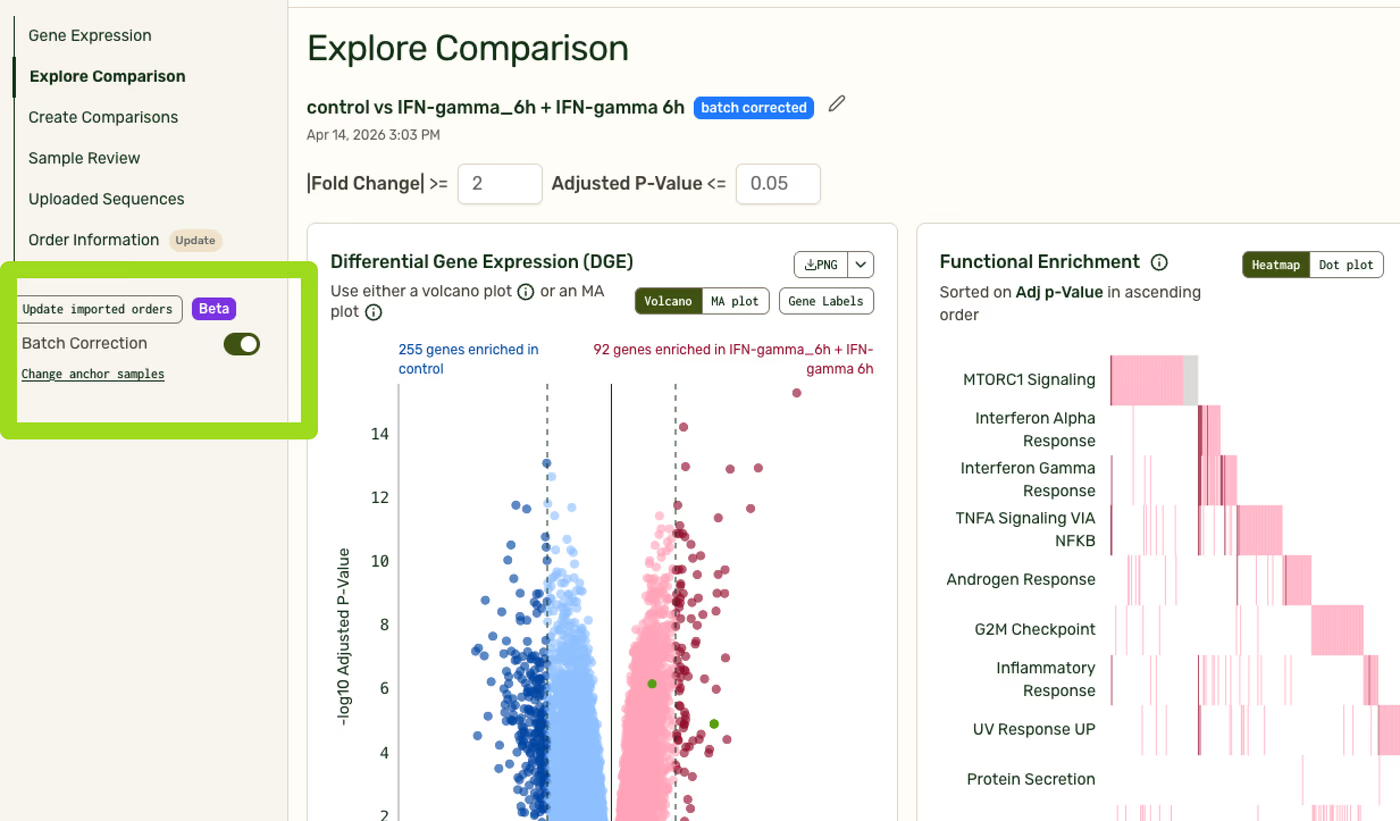
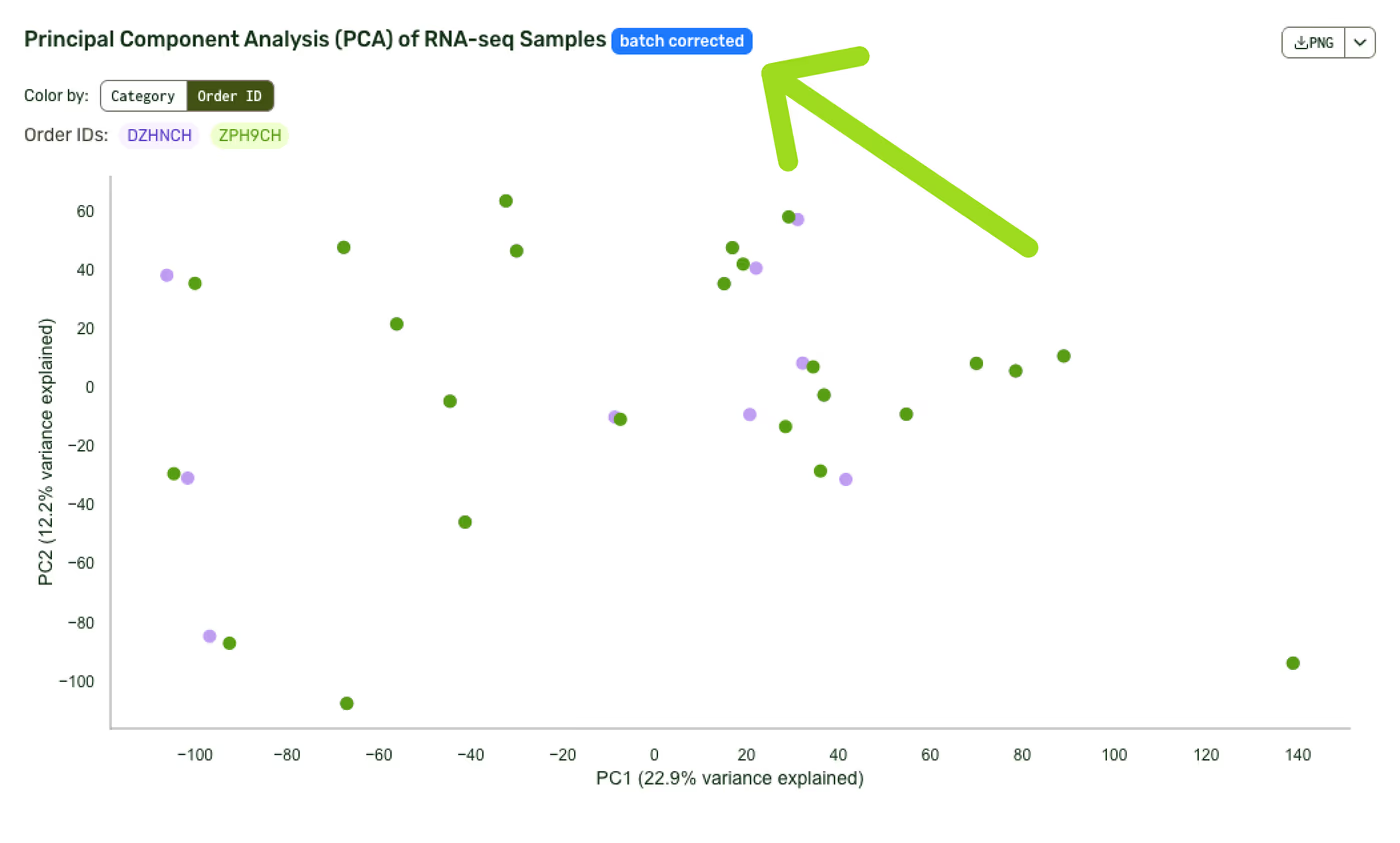
Specific plots that use the batch correction will be marked with a blue “Batch corrected” badge.
Outcomes of Plasmidsaurus’s anchor-based batch correction
To validate our batch-correction feature, we created technical replicates of HEK cells—treated with IFN-Beta, IFN-Gamma, or no treatment—and sequenced them in two separate orders. We included 4 technical replicates for each of the 3 conditions.
| Run/Order | Condition | Condition Name |
| 1 | Untreated HEK cells (Control) | Control_1 |
| HEK cells treated with IFN-Beta | Beta_1 | |
| HEK cells treated with IFN-Gamma | Gamma_1 | |
| 2 | Untreated HEK cells (Control) | Control_2 |
| HEK cells treated with IFN-Beta | Beta_2 | |
| HEK cells treated with IFN-Gamma | Gamma_2 |
Batch correction eliminates differences between technical replicates
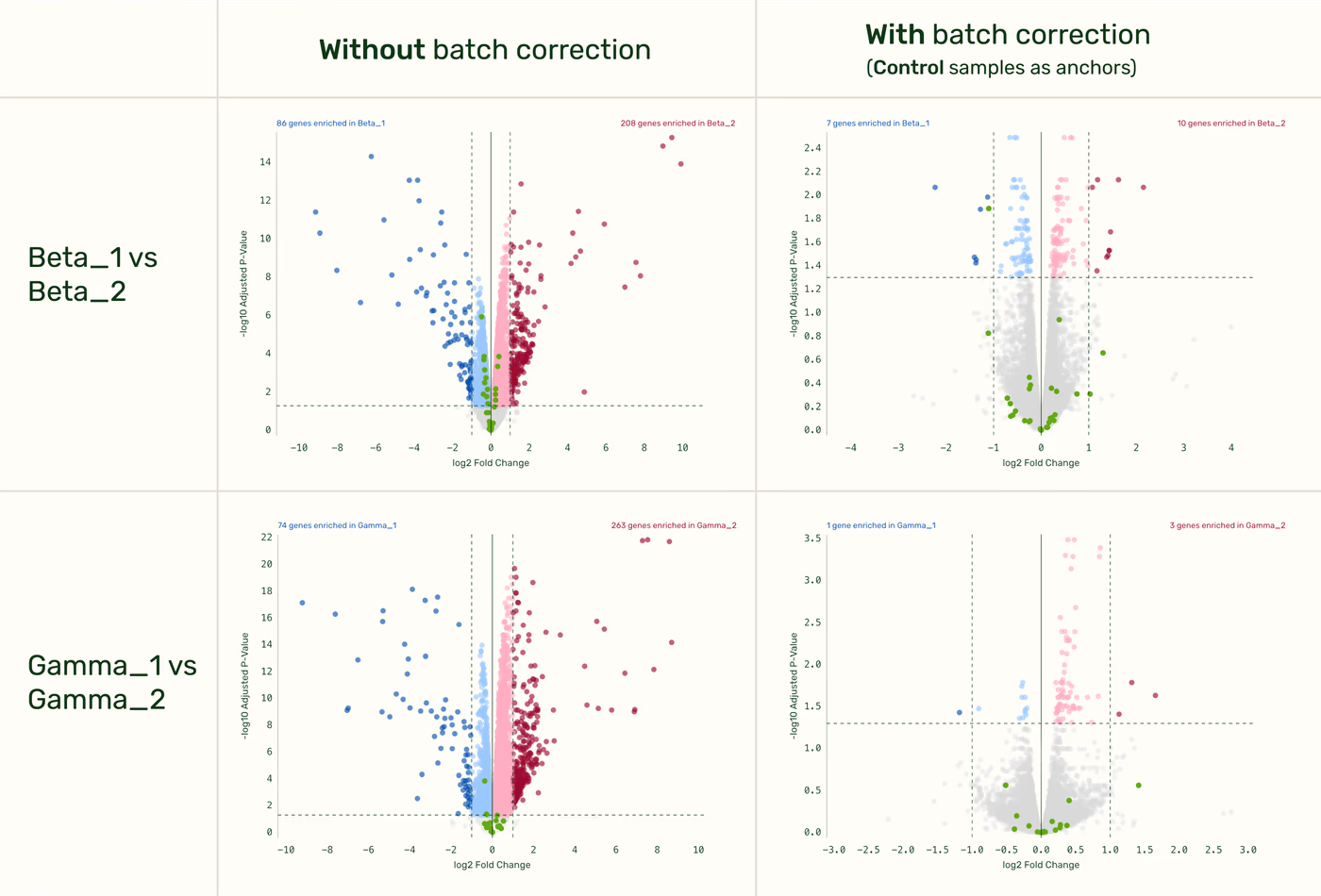
There should be no difference observed between the two technical replicates after batch correction has been applied. Cross order comparison between technical replicates of the same condition (Order 1 vs. Order 2 DGE fold-change) shows no differential expression (beyond the false discovery rate) after batch correction with control samples as anchors.
Any anchor with sufficient shared biology produces effective batch correction
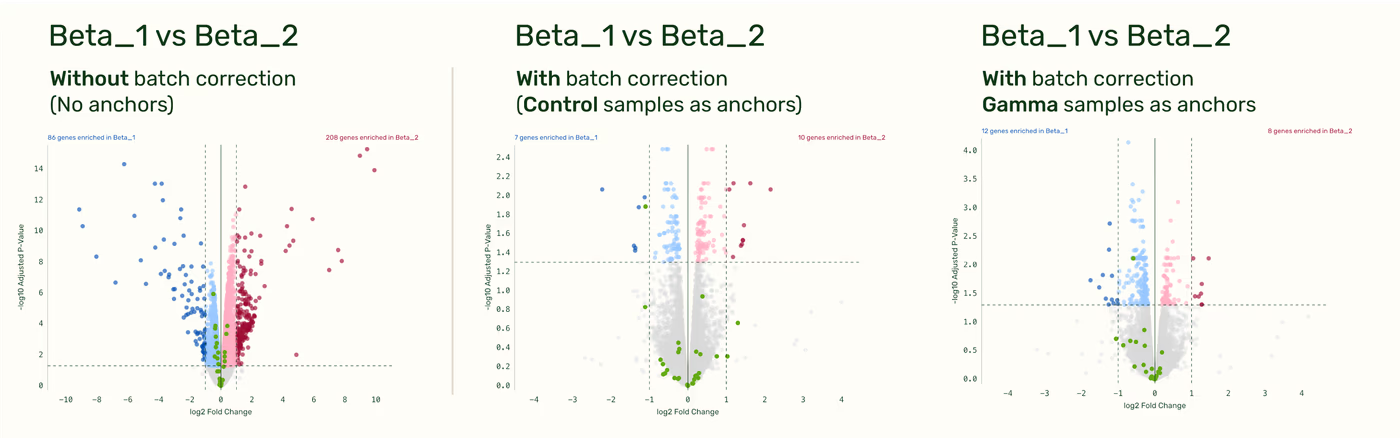
As long as your anchor samples share sufficient biology with the sample categories used in the DGE, the specific choice of anchor remains flexible. (”Sufficient biology” means that a DGE comparison between any group in the batch corrected comparison and the anchor category itself would also be meaningful.) For example, a cross-run comparison (Beta_1 vs. Beta_2 fold-change) produces similar results whether you use the Control samples or the Gamma samples as your anchors.
Batch correction recovers gold standard DGE results across runs
To demonstrate the impact of batch correction on a DGE comparison in a more typical experimental workflow, we compared the output of a “gold standard” comparison within the same run (Control_1 vs Beta_1, no batch effects) with the output of a batch corrected cross-run comparison (Control_1 vs. Beta_2). We see that using either the Control samples as anchors or the Gamma samples as anchor yields an output much more similar to the “gold standard” comparison than without any batch correction.
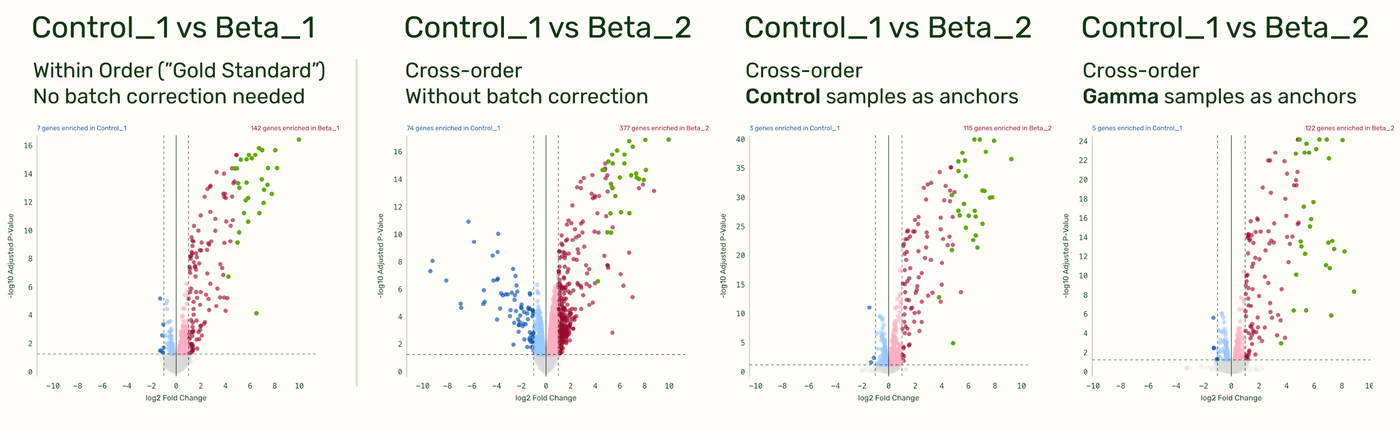
Note: When given the option, there is a slight improvement in sensitivity if running a DGE with batch correction where one of the comparison groups is the anchor group, compared to if neither comparison groups are the anchor group. E.g. If comparing Control_1 vs Beta_2, using the control samples as anchors will yield more sensitive results than using the gamma samples as anchors. This is an improvement in the DGE output, not of the batch correction. This is because when running a DGE where one of the groups in the comparison is the anchor group, all anchor samples get automatically folded into the DGE. With more samples in a group, the statistical power of the DGE increases.
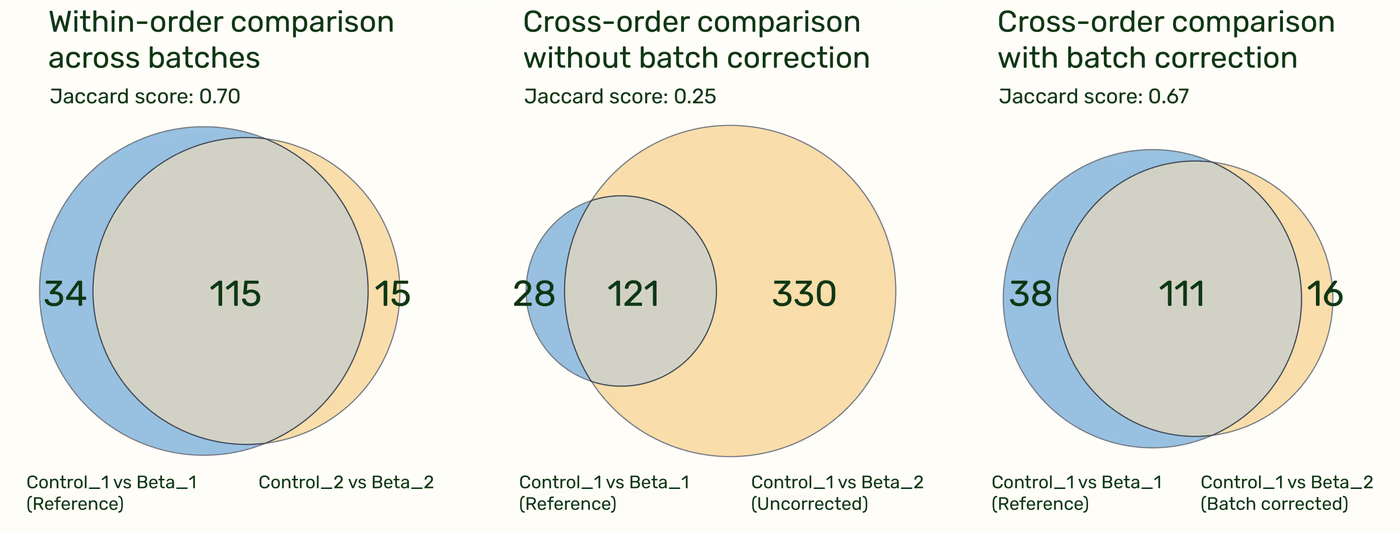
The reproducibility of the genes found to differentially express is easiest visualized with Venn Diagrams. Within-order comparisons between the Control sample and HEK cells treated with IFN-Beta show high agreement with one another. Without batch correction, cross-order comparisons are unreliable, but after correction, they have similar results to the within-order comparisons.
Summary
The most reliable way to compare DGE data is to sequence all of your samples in one run of 96 or fewer samples to avoid batch effects entirely. When you have to split your project into different runs, anchor-based batch correction is the most effective way to keep your data consistent. The Plasmidsaurus batch correction feature is designed to be user-friendly, handling the complex math behind the scenes, to ensure that the patterns you see in your data are a true reflection of your biology, not just a byproduct of when the samples were sequenced.
PS-0011-E | v1.1 | Revised Sept. 24, 2026