Microbiome 16S Amplification & Sequencing with DNA Extraction
| Service Level | Sample Input | Read Depth/Sample |
|---|---|---|
| Standard | Environmental samples | Up to 5,000 |
| Big | Up to 10,000 | |
| Huge | Up to 20,000 | |
| Bronto | Up to 500,000 |
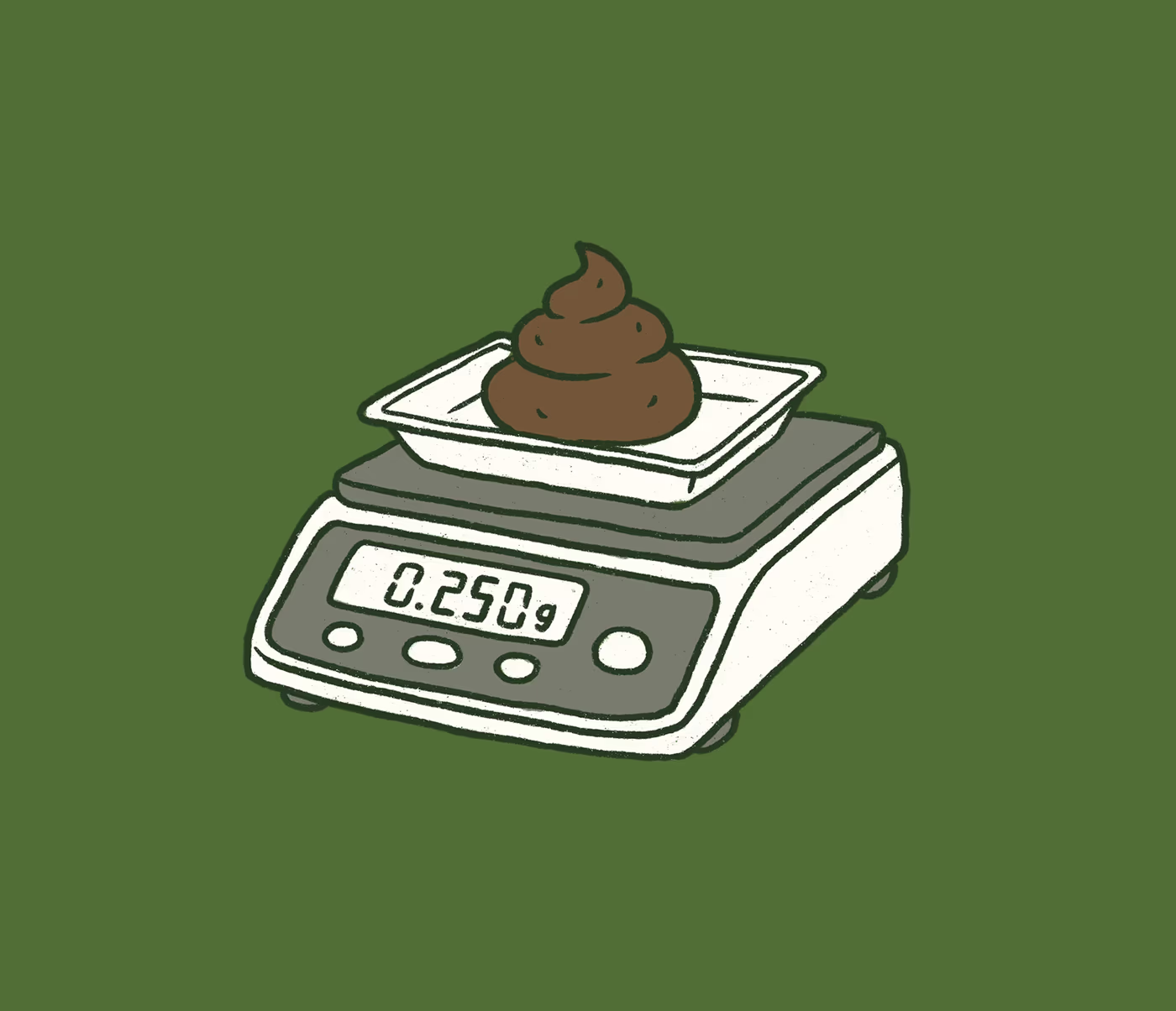
Weigh your sample and mix with Zymo 1X DNA/RNA Shield™.
Gather the specified weight or volume of your sample according to the type of source material.
| Source Material | Required Amount of Material |
|---|---|
| Soil | 100-250 mg |
| Feces | 100-250 mg |
| Swab (e.g. buccal, nasal) | 1 swab |
| Filter (e.g. air, water) | 1 filter, cut into small pieces |
| Liquid (e.g. water, urine) | 100-250 uL |
| Cell culture | 50-100 mg wet pellet |
| Biofilm | 50-100 mg wet biofilm |
Add 500 uL of Zymo 1X DNA/RNA Shield™ into a 2 mL screw cap tube (when ordering Zymo DNA/RNA Shield™, you can enter PLASMIDSAURUS at checkout for 10% off).
Place the specified amount of the source material into the tube containing DNA/RNA Shield. Invert the tube 5–10 times to mix. Vortex if necessary to achieve a homogeneous mixture.
If the DNA/RNA Shield is fully absorbed by the sample, add addition DNA/RNA Shield until the mixture is an invertible liquid.
Package your sample securely.
Set up your order online.
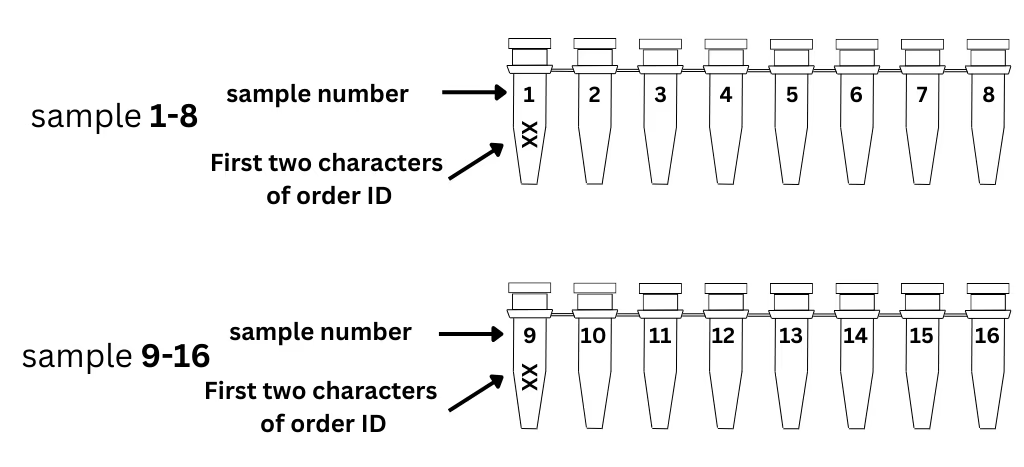
Label each screw cap tube with the first two characters of the order code and the sample number. For example, “XX-3” would indicate order XXYYZZ, sample 3.
Samples must be obscured from view. You can use opaque 2mL tubes or wrap standard 2 mL screw cap tubes in foil.
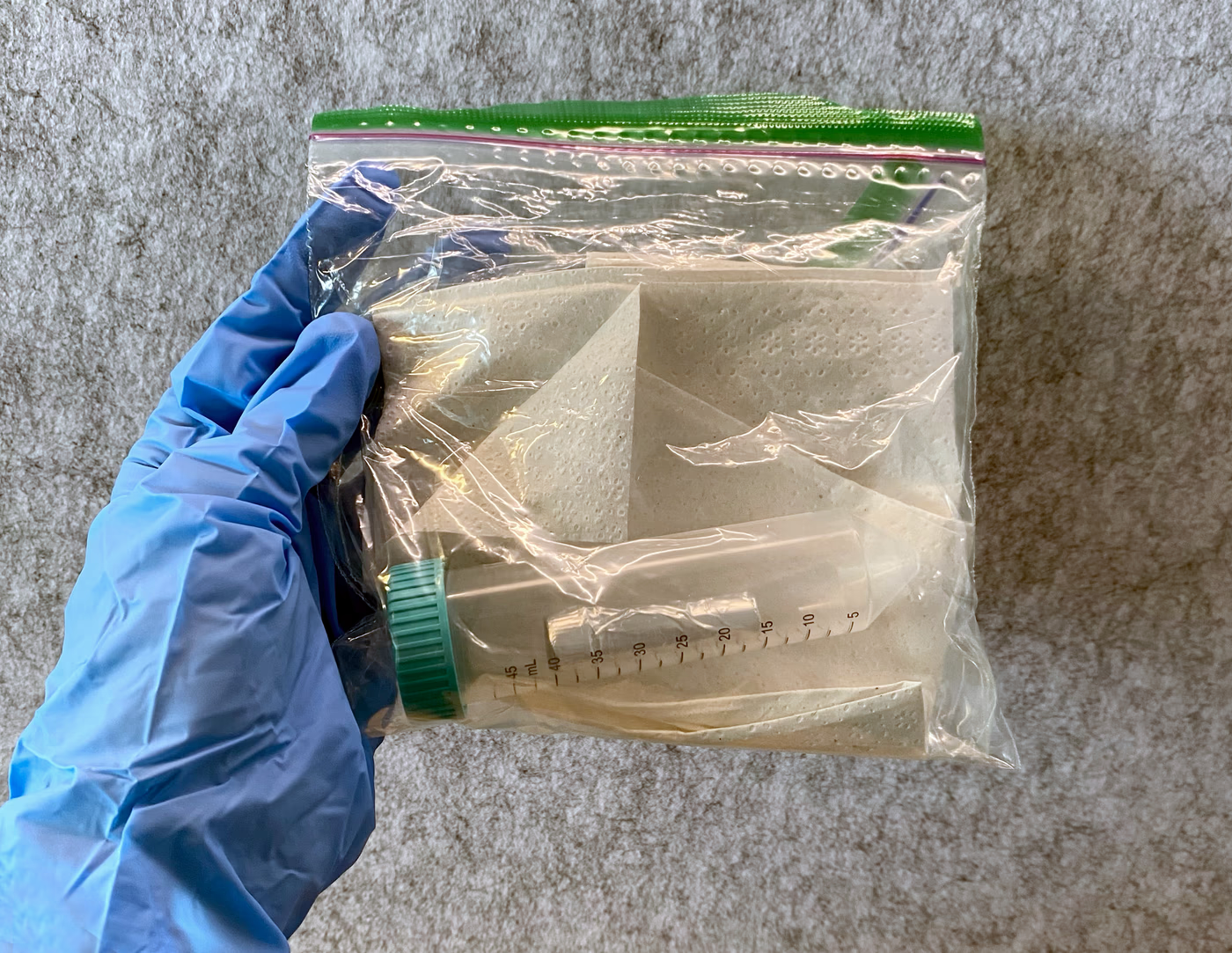
Place the foil wrapped screw cap tubes in a rigid container, such as a falcon tube or tube box.
Double-bag the rigid vessel in at least two plastic bags.
Place an absorbent pad into the plastic bag along with the rigid vessel. For orders of more than 10 samples, please put the tubes in a tube box and load the samples row by row in numerical order.
Ship us your sample.
Direct shipping to our Eugene, Oregon lab is required. Dropboxes cannot be used for raw biological materials.
Due to regulations on the shipment of biological samples, we can only accept shipments of environmental samples from labs in the United States.
Place packaged samples in a sturdy cardboard envelope, padded envelope, or cardboard box.
Print out your order form. Fold so that QR code is readily visible and include in your envelope or box.
Ship package using the printed label directly to our Eugene, Oregon lab via any Express or First-Class shipping carrier such as FedEx, UPS, DHL, or USPS. Ship at room temperature. Dry ice and cold packs are not necessary.
Ship to:
Plasmidsaurus
1850 Millrace Drive, Suite 200
Eugene, OR 97403
Microbiome 16S Amplification & Sequencing
| Service Level | Sample Input | Read Depth/Sample | Minimum Volume | Concentration |
|---|---|---|---|---|
| Standard | gDNA | Up to 5,000 | 10 µL min | 10 ng/µL |
| Big | Up to 10,000 | 20 µL min | ||
| Huge | Up to 20,000 | 40 µL min | ||
| Bronto | Up to 500,000 | 40 µL min |
Extract and purify genomic DNA.
Use your favorite method to extract and purify genomic DNA from your source material (e.g. soil, swabs, feces, etc.). RNase treatment is required during extraction.
Any extraction method that yields high quality, high purity, high molecular weight (HMW), double-stranded gDNA that is free of nicks, gaps, breaks, and contaminants is suitable for this service.
Some microbes within a community may be lysed more easily than others (e.g., gram-negative bacteria vs. gram-positive bacteria). For the most accurate community profiling, please refer to published literature to ensure you are using a metagenomic extraction protocol that will produce a non-biased lysate.
Be gentle with your gDNA
- Avoid vortexing and fast or unnecessary pipetting; pipet with wide-bore tips only
- Elute in elution buffer, not water
- Do not expose to high temperatures (>37°C) for >1 hour, pH extremes ( <6 or>9), intercalating fluorescent dyes, or UV radiation
- Avoid freeze-thaw cycles; store gDNA at 4°C for 1-2 months
- If using a speed-vac, avoid over-drying of gDNA; do not use heat in the speed-vac
Samples should NOT contain any of the following
- Sequencing primers
- RNA (RNase treatment is required during extraction)
- Denaturants (guanidinium salts, phenol, etc.) or detergents (SDS, Triton-X100, etc.)
- Residual contaminants from the organism (heme, humic acid, polyphenols, etc.)
- Insoluble material, colors, or cloudiness
Perform quality control checks.
Our low prices and fast turnaround times do not include gDNA quality control (QC) services, so it’s important that you verify that your samples meet our requirements prior to shipping them to us.
Measure gDNA concentration with fluorometry
- We require performing DNA quantification assay with Qubit or equivalent fluorometric method such as a plate reader. Spectrophotometric methods like Nanodrop are much less accurate and submitting the wrong concentration can cause sequencing failure!
- Please note: High molecular weight (HMW) gDNA often requires extra homogenization effort (longer incubation time, increased incubation temperature, very extensive gentle mixing, etc.) to obtain accurate quantification. If separate DNA quantifications from the top and bottom of the sample are within 15% of each other, this is usually a good indication of adequate homogeneity.
Measure gDNA purity with spectrophotometry
- This step is strongly recommended. We recommend gDNA samples with 260/280 of ~1.8 and 260/230 between 2.0-2.2. Purity assay may be performed with Nanodrop or other spectrophotometric methods. If your sample is contaminated and does not meet this metric, either re-extract the sample or clean up the sample to remove the contaminants using a Qiagen cleanup kit or AMPure XP beads.
Assess gDNA quality with gel electrophoresis
- This step is strongly recommended. Get the most out of long-read sequencing by keeping your fragments long. We recommend gDNA samples with >50% of the total DNA mass contained within fragments above 15 kb in size. If the sample does not meet this metric, we strongly recommend repeating extraction. Size characterization may be performed with Femto Pulse, Fragment Analyzer, Bioanalyzer, or a slab gel with a HMW ladder (ideally with pulsed-field electrophoresis).
Normalize your genomic DNA concentration.
Submit your final purified metagenomic DNA normalized to 10ng/μL in the volume of elution buffer (10 mM Tris, pH 8.5) or nuclease-free water specified in the table above.
If you don’t have enough DNA to reach the minimum volume at 10 ng/μL, we’d recommend extracting more DNA if possible. If that’s not possible, send us an email at support@plasmidsaurus.com and submit a lower volume at 10 ng/μL.
Label your tubes or plates.
- Set up your order online and receive your unique 6-character order ID.
- Write the first 2 characters of your order ID on the 1st tube of each strip

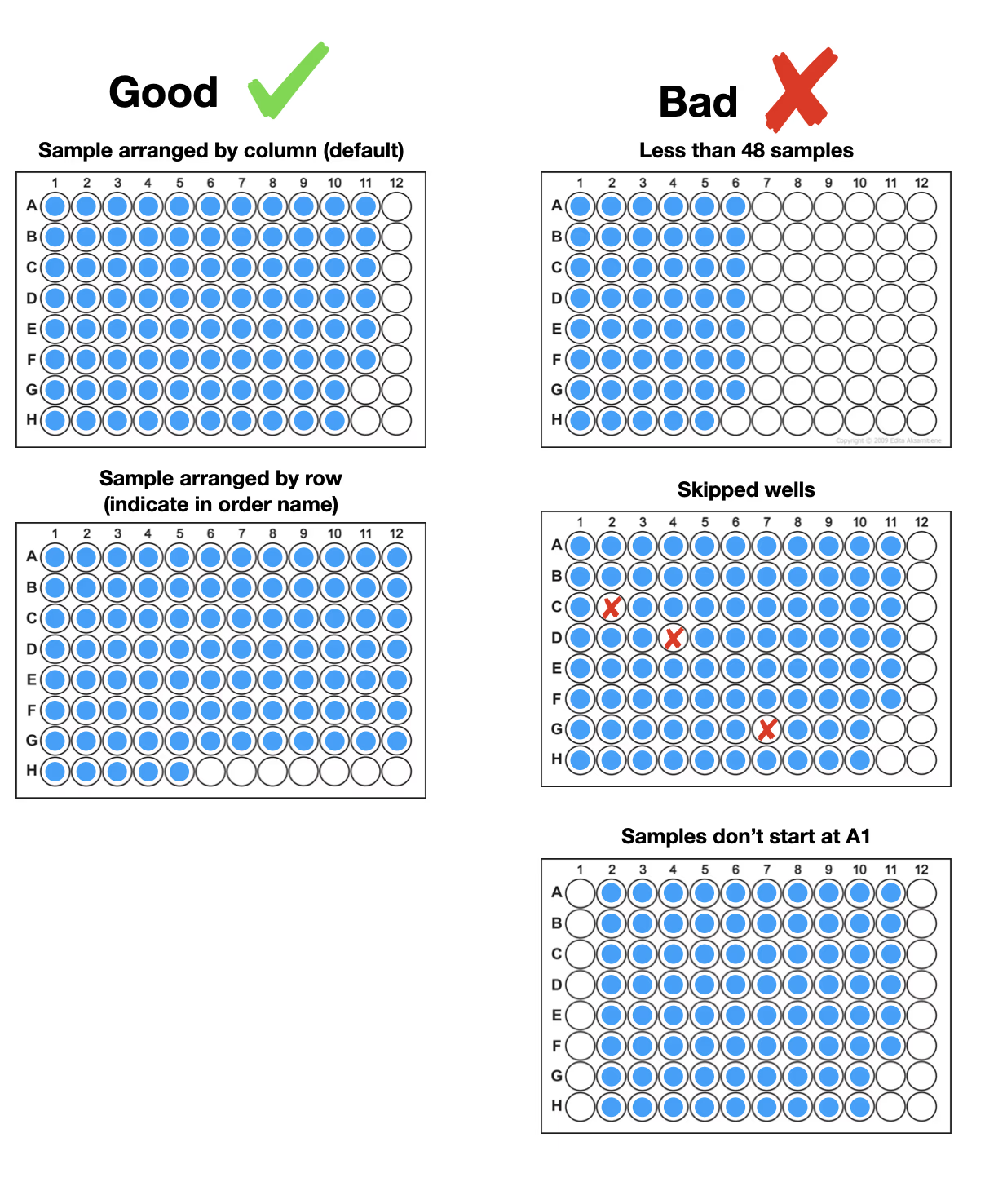
- Set up your order online and receive your unique 6-character order ID. On the order page, please check the “Is this a plate submission?” checkbox, then select if your plate is numbered sequentially by column or by row.
- Label the front edge of the plate with the full 6-character order ID.
- If you are using column numbering, label the first column (i.e., samples 1 to 8). If you are using row numbering, label the first row (i.e., samples 1 to 12).
Load and package your sample.
Add the correct volume of your sample(s) according to the instructions above. Make sure to seal and package your samples well to make sure they arrive safely for sequencing!
- Ensure caps fit snugly and close them firmly. Do not use brands of strip tubes where the caps can easily pop open during shipping.
- Place the labeled tubes into a small protective vessel (such as a Falcon tube, a small box, or bubble wrap) to protect them during shipping. Why?
Start with well A1 and load your samples contiguously. Our preference is for samples to be loaded by column but we can accept samples loaded by row if indicated in the order. Do not leave any empty wells between samples.

- Ensure your plates are sealed extremely thoroughly to survive shipping without leaking — sadly we receive a lot of leaky plates. We strongly recommend only using strip caps. For RNA-Seq samples in Zymo DNA/RNA Shield, do not use adhesive seals, as the adhesive will dissolve and the wells will leak.
- Wrap each plate individually in bubble wrap or other packaging material to prevent cracking and seal punctures. DO NOT stack multiple plates directly on top of each other, as the wells of one plate will likely puncture the seal of the next plate.
Dropoff or ship.
Print out your order form. Fold so that QR code is readily visible and place in a small bag with your samples.
For fastest results and easiest shipping, place your samples in a Plasmidsaurus Dropbox!
If you ship your samples to us directly:
- Place packaged samples in a sturdy cardboard or padded envelope or a cardboard box. If reusing old packaging, ensure that any hazard warnings are completely obliterated. Multiple orders can be shipped in the same package, as long as each order is placed into a separate bag with its corresponding order confirmation sheet.
- Do not add ice packs or dry ice. Samples should be shipped at room temperature.
- Ship via any Express or First-Class shipping carrier such as FedEx, UPS, DHL, or USPS. The shipping address will be provided on your order confirmation sheet.
If you aren't using a Plasmidsaurus dropbox, print and fill out the following documents:
- Commercial Shipping Invoice - gDNA
For best results, make sure to include the shipper's identity, shipper's address, and the quantity of items within the shipment.
- Detailed Description - gDNA
- Toxic Substances Control Act (TSCA) Certificate - gDNA (only if shipping from outside of US to US)
Further guidance for international shipping
- The information below constitutes only a recommendation for shipping samples classified as "non-regulated materials" to our facility. Due to continuing changes in state and federal regulations, clients should always check with their safety office and/or shipping department to ensure regulatory compliance.
- Make sure all forms are fully completed. Incomplete and/or missing forms will likely cause delays and other issues.
- Keep an eye out for any communication or information requests from your shipping company of choice in case of issues. It is your responsibility to provide any information they request, and we advise following their guidance as their systems will have the most up-to-date customs information.
Why do I need these forms? Read more here.
- Samples must be packaged and shipped in accordance with U.S. Department of Transportation (DOT) and/or International Air Transport Association (IATA)/ International Civil Aviation Organization (ICAO) and carrier regulations.
- Your international courier will require you to complete a commercial invoice to be included with the shipment.
- The commercial invoice should describe the contents as “non-hazardous, non-contagious research sample.” Please list your institution as the "Manufacturer" of the samples if Manufacturers Identification (MID) code is required.
- State that the “contents are Not Restricted under IATA DGR regulations.”
- We recommend that you include a Toxic Substance Control Act (TSCA) Certification. If you do not include this, the package may be delayed at customs until the courier receives the proper certification.
- Declare the value of the goods to be $1.
- We only accept pure DNA samples that are intended for Research Use Only! We DO NOT accept any samples for clinical diagnostics or trials. Any samples that do not conform to our submission guidelines will be discarded and/or submitted to the United States Postal Inspection Service
- If shipping to Cologne, certain sample types will require some additional information. Please reach out to support if you have any questions.
Category B infectious substances (UN 3373) are classified as being potentially harmful to humans or animals and must be packed in accordance with ADR (International carriage of dangerous goods by road) packing instruction PI 650 for road transport and IATA packing instruction PI 650 for air transport. - Unlike other dangerous goods, UN3373 shipments do not require a Shipper's Declaration. However, the Air Waybill (AWB) must include: “UN3373, Biological Substance, Category B” Net quantity
- UN3373 (Biological Substance, Category B) requires triple packaging per Packing Instruction 650 (PI650) to ensure safe transport. This consists of a leakproof primary receptacle, a leakproof secondary packaging with absorbent material, and a rigid outer package, with proper labeling (UN3373 diamond).
- Shipping UN 3373 Biological Substances (Category B) into Germany requires strict adherence to international (IATA for air, ADR for road) and national regulations to ensure safety and compliance with customs. Please make sure you are following these regulations.
- The commercial invoice should describe the contents as “non-hazardous, non-contagious research sample.” Please list your institution as the "Manufacturer" of the samples if Manufacturers Identification (MID) code is required.
- Please make sure to use the correct HTS code to ensure fastest processing. The HTS code we use for our shipments is found on the template commercial invoice document above.
- We recommend including a detailed customs description (the template for which can be found above), or a Material Data Safety Sheet (if you have one already available for your samples). This is not required, but can be requested by customs if a delay occurs.
Microbiome Amplicon Sequencing
| Service Level | Sample Input | Read Depth/Sample | Minimum Volume | Concentration |
|---|---|---|---|---|
| Standard | Linear double-stranded DNA | Up to 5,000 | 10 µL min | 10-20 ng/µL |
| Big | Up to 10,000 | 20 µL min | ||
| Huge | Up to 20,000 | 40 µL min |
Prepare your sequence of linear double-stranded DNA.
Amplify 16S, 18S, and/or ITS DNA according to your protocols.
(Optional) Purify your sample.
Plasmidsaurus can purify your samples for you. Simply add on the cleanup option when placing your order and we’ll take care of the rest.
If you don’t choose the cleanup option, you should purify your DNA sample over a column (e.g. Zymo C & C) or via magnetic beads (e.g. Ampure XP). Elute into elution buffer (10 mM Tris, pH 8.5) or nuclease free water. Avoid buffers containing DMSO.
We recommend samples with 260/280 of ~1.8 and 260/230 between 2.0-2.2. Purity may be assayed with Nanodrop or other spectrophotometric methods.
Samples should not contain any of the following
- Sequencing primers
- RNA (RNAse treatment is recommendedd during extraction)
- Denaturants (guanidinium salts, phenol, etc.) or detergents (SDS, Triton-X100, etc.)
- Residual contaminants from the organism (heme, humic acid, polyphenols, etc.)
- Insoluble material, colors, or cloudiness
Verify your DNA concentration.
For best results, please measure your DNA concentration and normalize to between 10-20 ng/μL.
We strongly recommend performing DNA quantification assay with Qubit or equivalent fluorometric method such as a plate reader (spectrophotometric methods like Nanodrop are much less accurate).
Label your tubes or plates.
- Set up your order online and receive your unique 6-character order ID.
- Write the first 2 characters of your order ID on the 1st tube of each strip

- Set up your order online and receive your unique 6-character order ID. On the order page, please check the “Is this a plate submission?” checkbox, then select if your plate is numbered sequentially by column or by row.
- Label the front edge of the plate with the full 6-character order ID.
- If you are using column numbering, label the first column (i.e., samples 1 to 8). If you are using row numbering, label the first row (i.e., samples 1 to 12).
Load and package your sample.
Add the correct volume of your sample(s) from the table above. Make sure to seal and package your samples well to make sure they arrive safely for sequencing!
- Ensure caps fit snugly and close them firmly. Do not use brands of strip tubes where the caps can easily pop open during shipping.
- Place the labeled tubes into a small protective vessel (such as a Falcon tube, a small box, or bubble wrap) to protect them during shipping. Why?
Start with well A1 and load your samples contiguously. Our preference is for samples to be loaded by column but we can accept samples loaded by row if indicated in the order. Do not leave any empty wells between samples.

- Ensure your plates are sealed extremely thoroughly to survive shipping without leaking — sadly we receive a lot of leaky plates. We recommend using a heat seal (rather than adhesive) or snugly-fitting strip caps on top of the plate. If you only have adhesive options, click here for some examples of sealing technique.
- To prevent cross contamination of samples, our customers have also had good success with dehydrating plates: spin the plate(s) down and then place the plate(s) on a 65 degree heating block for 0.5 to 1 hour or until dry. After dry, you can seal the plate with sticky film to prevent contamination of the sample during transport. We will rehydrate the sample in our lab for sequencing.
- Wrap each plate individually in bubble wrap or other packaging material to prevent cracking and seal punctures. DO NOT stack multiple plates directly on top of each other, as the wells of one plate will likely puncture the seal of the next plate.
Dropoff or ship.
Print out your order form. Fold so that QR code is readily visible and place in a small bag with your samples.
For fastest results and easiest shipping, place your samples in a Plasmidsaurus Dropbox!
If you ship your samples to us directly:
- Place packaged samples in a sturdy cardboard or padded envelope or a cardboard box. If reusing old packaging, ensure that any hazard warnings are completely obliterated. Multiple orders can be shipped in the same package, as long as each order is placed into a separate bag with its corresponding order confirmation sheet.
- Do not add ice packs or dry ice. Samples should be shipped at room temperature.
- Ship via any Express or First-Class shipping carrier such as FedEx, UPS, DHL, or USPS. The shipping address will be provided on your order confirmation sheet.
If you aren't using a Plasmidsaurus dropbox, print and fill out the following documents:
- Commercial Shipping Invoice - DNA
For best results, make sure to include the shipper's identity, shipper's address, and the quantity of items within the shipment.
- Detailed Description - DNA
- Toxic Substances Control Act (TSCA) Certificate - DNA (only if shipping from outside of US to US)
Further guidance for international shipping
- The information below constitutes only a recommendation for shipping samples classified as "non-regulated materials" to our facility. Due to continuing changes in state and federal regulations, clients should always check with their safety office and/or shipping department to ensure regulatory compliance.
- Make sure all forms are fully completed. Incomplete and/or missing forms will likely cause delays and other issues.
- Keep an eye out for any communication or information requests from your shipping company of choice in case of issues. It is your responsibility to provide any information they request, and we advise following their guidance as their systems will have the most up-to-date customs information.
Why do I need these forms? Read more here.
- Samples must be packaged and shipped in accordance with U.S. Department of Transportation (DOT) and/or International Air Transport Association (IATA)/ International Civil Aviation Organization (ICAO) and carrier regulations.
- Your international courier will require you to complete a commercial invoice to be included with the shipment.
- The commercial invoice should describe the contents as “non-hazardous, non-contagious research sample.” Please list your institution as the "Manufacturer" of the samples if Manufacturers Identification (MID) code is required.
- State that the “contents are Not Restricted under IATA DGR regulations.”
- We recommend that you include a Toxic Substance Control Act (TSCA) Certification. If you do not include this, the package may be delayed at customs until the courier receives the proper certification.
- Declare the value of the goods to be $1.
- We only accept pure DNA samples that are intended for Research Use Only! We DO NOT accept any samples for clinical diagnostics or trials. Any samples that do not conform to our submission guidelines will be discarded and/or submitted to the United States Postal Inspection Service
- If shipping to Cologne, certain sample types will require some additional information. Please reach out to support if you have any questions.
Category B infectious substances (UN 3373) are classified as being potentially harmful to humans or animals and must be packed in accordance with ADR (International carriage of dangerous goods by road) packing instruction PI 650 for road transport and IATA packing instruction PI 650 for air transport. - Unlike other dangerous goods, UN3373 shipments do not require a Shipper's Declaration. However, the Air Waybill (AWB) must include: “UN3373, Biological Substance, Category B” Net quantity
- UN3373 (Biological Substance, Category B) requires triple packaging per Packing Instruction 650 (PI650) to ensure safe transport. This consists of a leakproof primary receptacle, a leakproof secondary packaging with absorbent material, and a rigid outer package, with proper labeling (UN3373 diamond).
- Shipping UN 3373 Biological Substances (Category B) into Germany requires strict adherence to international (IATA for air, ADR for road) and national regulations to ensure safety and compliance with customs. Please make sure you are following these regulations.
- The commercial invoice should describe the contents as “non-hazardous, non-contagious research sample.” Please list your institution as the "Manufacturer" of the samples if Manufacturers Identification (MID) code is required.
- Please make sure to use the correct HTS code to ensure fastest processing. The HTS code we use for our shipments is found on the template commercial invoice document above.
- We recommend including a detailed customs description (the template for which can be found above), or a Material Data Safety Sheet (if you have one already available for your samples). This is not required, but can be requested by customs if a delay occurs.